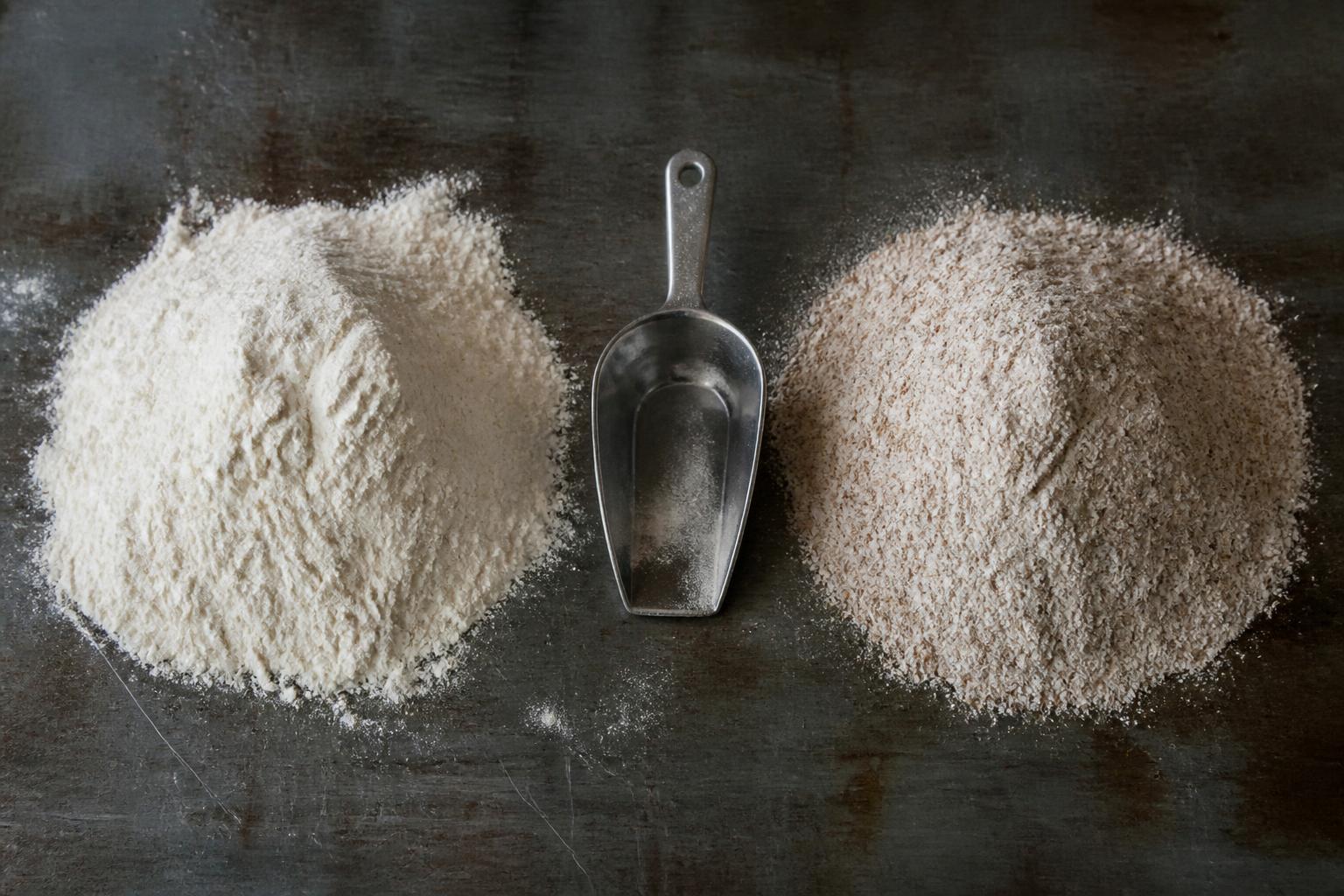
Yes, But With Adjustments
Swapping flour changes everything: hydration needs, gluten strength, flavor, and texture. Here's how to do it right.
Whole Wheat Flour
The Rules
- Never go 100% whole wheat for your first attempt — start with 20-30% substitution
- Increase hydration by 5-10% (whole wheat absorbs more water)
- Expect denser texture — whole wheat has less gluten-forming potential
- Flavor: Nuttier, heartier, slightly bitter
Recommended Blend
- 70% bread flour / 30% whole wheat = great flavor + good texture
- 50/50 blend = very hearty, works for pan-style pizzas
Semolina (Durum Wheat)
- Adds golden color and slight crunch
- Use 10-20% blended with regular flour
- Common in Sicilian and some Roman styles
- Don't use 100% — too stiff for pizza
Spelt Flour
- Ancient grain, easier to digest for some people
- Weaker gluten — handle gently, don't over-knead
- Needs less hydration than whole wheat
- Lovely nutty flavor at 30-50% substitution
Rye Flour
- Very low gluten — max 10-15% substitution
- Adds complex, slightly sour flavor
- Makes dough stickier — use wet hands
- Interesting in combination with sourdough
Gluten-Free Flours
- Not a simple substitution — requires completely different recipes
- Need binding agents (xanthan gum, psyllium husk)
- Rice flour + tapioca starch blends work best
- Expect different texture — won't be the same as wheat pizza