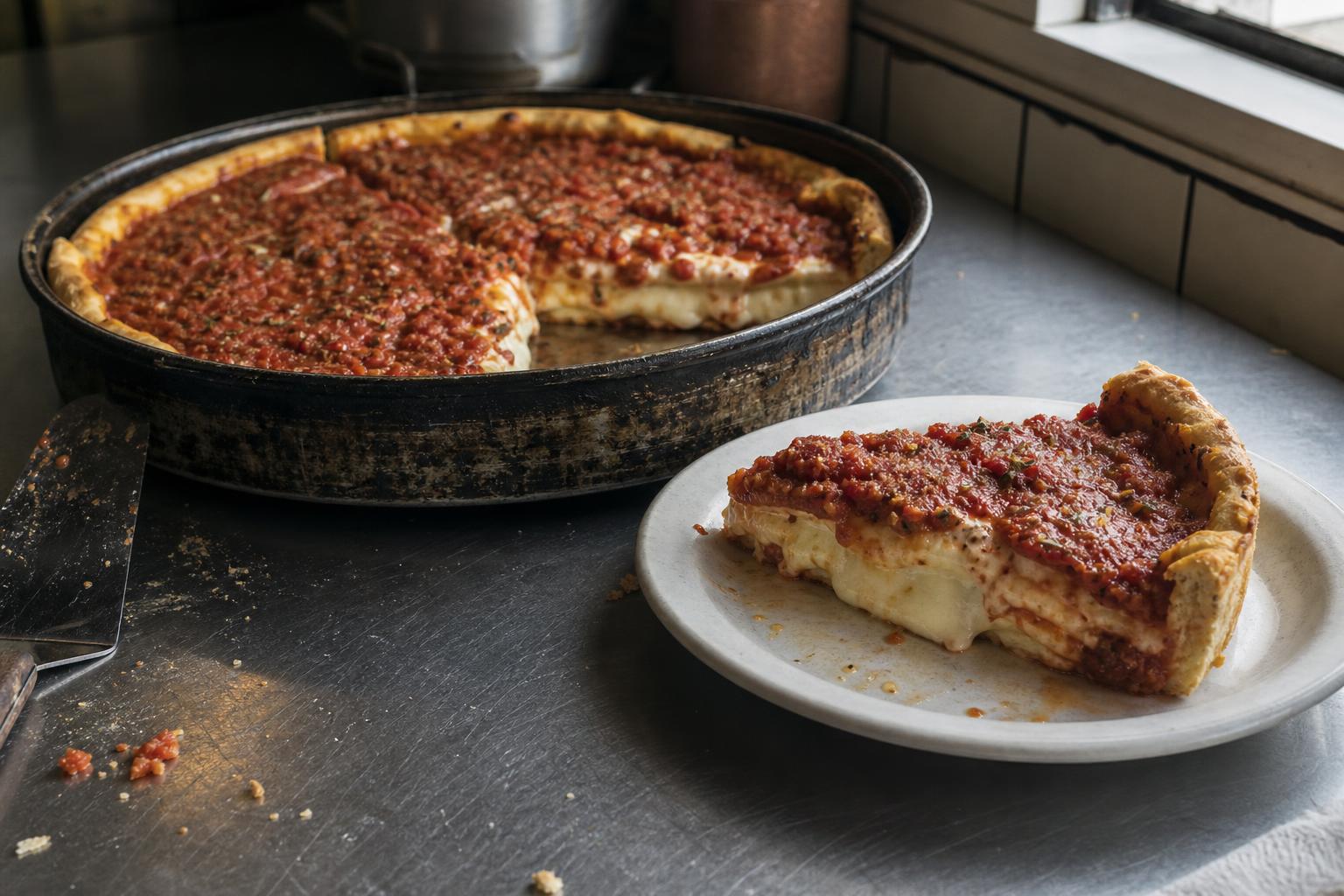
What Makes Chicago Deep Dish Different?
Chicago deep dish isn't just thick pizza – it's an entirely different architecture. Invented in 1943 at Pizzeria Uno by Ike Sewell and Ric Riccardo, deep dish flips the script on everything you know about pizza.
The crust lines a deep, round, oiled pan like a pie shell. Cheese goes directly on the dough, then fillings, then sauce on top. This inverted layering isn't just aesthetic – it prevents the cheese from burning during the long bake.
The Crust: Buttery, Flaky, Sturdy
Deep dish crust contains a significant amount of butter or oil (sometimes both), giving it a rich, almost shortbread-like character. Some recipes incorporate cornmeal for texture, though classic Chicago bakeries debate this endlessly.
Key characteristics:- 55–58% hydration (lower than most pizza doughs)
- 10–15% fat content (butter, olive oil, or a combination)
- Optional 5–10% cornmeal or semolina for crunch
- Strong bread flour (high protein, 12–13%) to support the heavy toppings
The Layering Logic
Fermentation Approach
Deep dish dough benefits from an overnight cold ferment (12–24 hours). The butter in the dough creates flaky layers similar to a laminated pastry when given time to develop.
Room temperature: 1–2 hours bulk ferment, then cold retard Cold retard: 12–24 hours (the butter firms up, creating texture)Baking
Deep dish bakes at a moderate temperature compared to other pizzas:
- Home oven: 220–230°C (425–450°F) for 25–35 minutes
- The long bake is essential – the thick structure needs time for heat to penetrate
Tips for Success
- Oil the pan generously – this creates the crispy, fried exterior
- Don't pre-bake the crust – it bakes together with the toppings
- Use cold butter cubed into the flour for maximum flakiness
- Let it rest 5 minutes after baking before cutting – the cheese needs to set
- A cast iron skillet works as well as a traditional deep dish pan