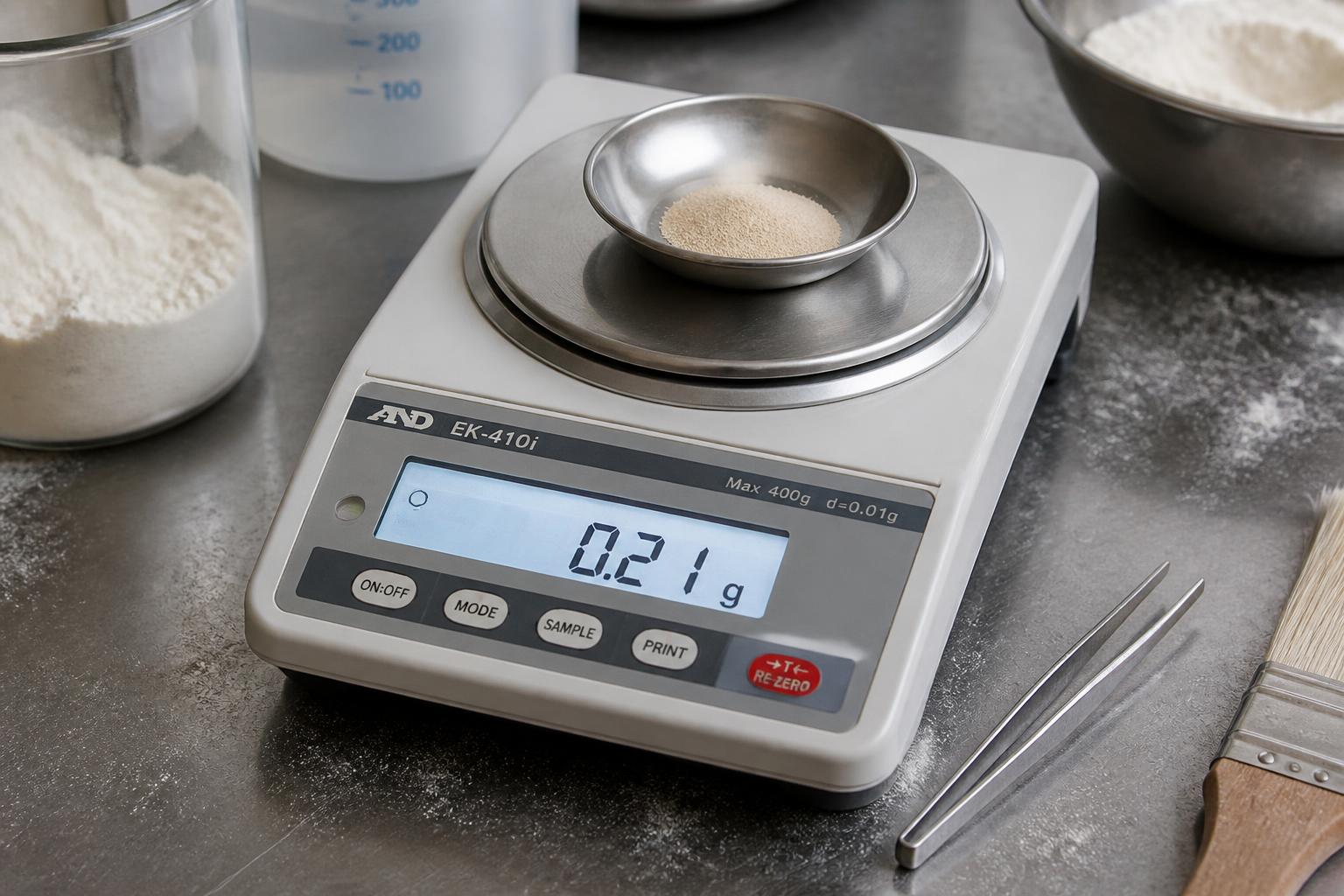
The Short Answer: Yes, Absolutely
When working with long fermentation times, even 0.2g of yeast can shift your timeline by 1–3 hours. That's the difference between perfect dough and over-proofed soup.
Why Small Amounts Matter
Yeast multiplies exponentially. A tiny starting difference becomes huge over 24+ hours:
- 1.0g fresh yeast → ready in ~20 hours
- 1.2g fresh yeast → ready in ~17 hours
- 0.8g fresh yeast → ready in ~24 hours
That's a 7-hour swing from just 0.4g difference.
The Math Behind It
Yeast doubles roughly every 90 minutes in ideal conditions. Starting with 20% more yeast means you're essentially 1–2 doublings ahead from the start.
How to Be Precise
When Precision Matters Less
For same-day doughs with 2–4 hour fermentation, ±0.5g won't ruin anything. The shorter the ferment, the more forgiving.