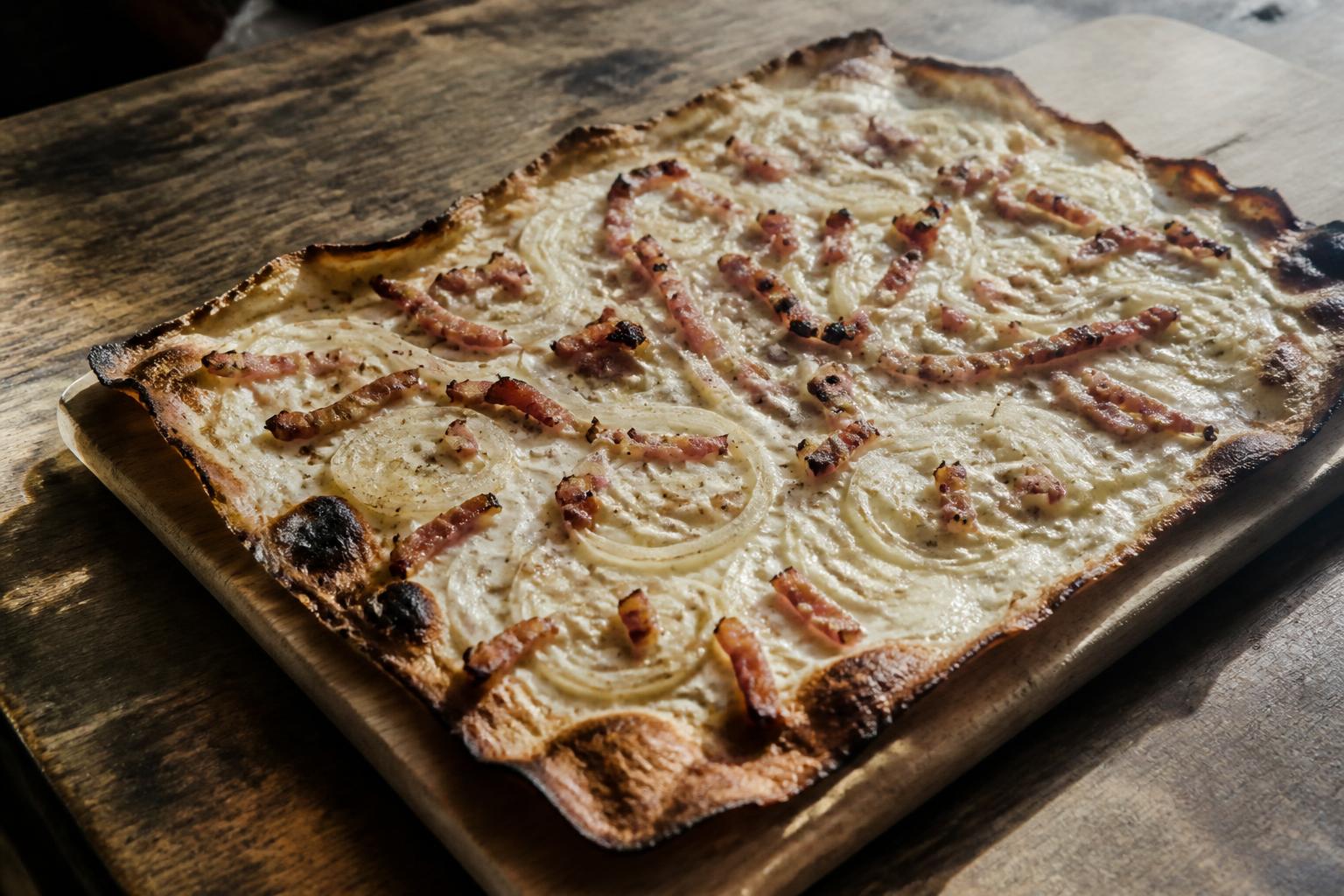
Flammkuchen: Alsace's Crispy Crème Fraîche Flatbread

Thinner than pizza, creamier than focaccia – Flammkuchen (tarte flambée) is the Franco-German flatbread that bakes in under 10 minutes. Master the no-yeast dough option and the classic three-ingredient topping.

6 min2/16/2026
Flammkuchen: Alsace's Crispy Crème Fraîche Flatbread

Quick Answer

Is Flammkuchen German or French?

Both! It comes from Alsace, a region that has historically been part of both countries. The German name 'Flammkuchen' and French 'tarte flambée' are equally authentic. The dish reflects the unique Franco-German culture of the region.

What Is Flammkuchen?

Flammkuchen (German) or tarte flambée (French) is a thin-crust flatbread from the Alsace region – the borderland between France and Germany. Traditionally baked in the residual heat of a wood-fired bread oven (hence "flame cake"), it's topped with crème fraîche, thinly sliced onions, and lardons.

The Dough: Two Schools

Yeast dough (traditional bakery style):
  • ✕ 55–60% hydration
  • ✕ Small amount of yeast
  • ✕ 1–2 tablespoons olive oil
  • ✕ Short ferment (1–2 hours)
No-yeast dough (home style):
  • ✕ Flour, water, oil, salt – mixed into a smooth, pliable dough
  • ✕ No rising time needed
  • ✕ Slightly crisper result, more cracker-like

Both approaches work. The traditional yeast version has a touch more chew; the quick version is crispier and faster.

Shaping

  • ✕ Roll as thin as possible – 1–2mm is the target
  • ✕ Rectangular or oval shapes are traditional (not round)
  • ✕ The dough should be almost translucent when held up to light
  • ✕ Dust the work surface with flour to prevent sticking

The Classic Topping

The beauty of Flammkuchen is its minimalism:

  • Crème fraîche (or a mix of crème fraîche and fromage blanc) – spread thin
  • White onions – sliced into very thin rings
  • Lardons/Speck – small pieces of smoked bacon
  • Season with nutmeg and white pepper (not black pepper!)
  • That's it. No tomato sauce. No mozzarella. The crème fraîche IS the sauce.

    Baking

    • Wood-fired oven: 350°C+, 2–3 minutes (the original method)
    • Home oven: Maximum temperature (250–280°C), directly on a pizza stone, 8–12 minutes
    • Done when: Edges are deeply browned and curling, base is crispy, crème fraîche is bubbling

    Variations

    • Gratinée: Add Gruyère or Münster cheese
    • Forestière: Mushrooms and herbs
    • Sweet: Apple slices, cinnamon, and sugar (an Alsatian dessert tradition)
    • Modern: Smoked salmon, horseradish cream, capers

    FAQ

    Is Flammkuchen German or French?

    Both! It comes from Alsace, a region that has historically been part of both countries. The German name 'Flammkuchen' and French 'tarte flambée' are equally authentic. The dish reflects the unique Franco-German culture of the region.

    Can I use sour cream instead of crème fraîche?

    Yes, though the result will be slightly tangier and thinner. For the closest match, mix sour cream with a tablespoon of cream cheese to thicken it. Fromage blanc (quark) mixed with cream is another excellent substitute.

    Why is Flammkuchen rectangular and not round?

    Traditionally, Flammkuchen was made from leftover bread dough, stretched to fit the rectangular baker's peel used for wood-fired ovens. The shape also allowed bakers to test oven temperature before loading bread.

    Tools You'll Use

    Make Flammkuchen Dough

    Make Flammkuchen Dough · 1d

    Make Flammkuchen Dough

    STAY IN THE LOOP FOR BETTER PIZZA

    Tips on pizza dough, fermentation, hydration, and modern pizza styles. Plus: get free access to the first RISE Pizza Handbook PDF.