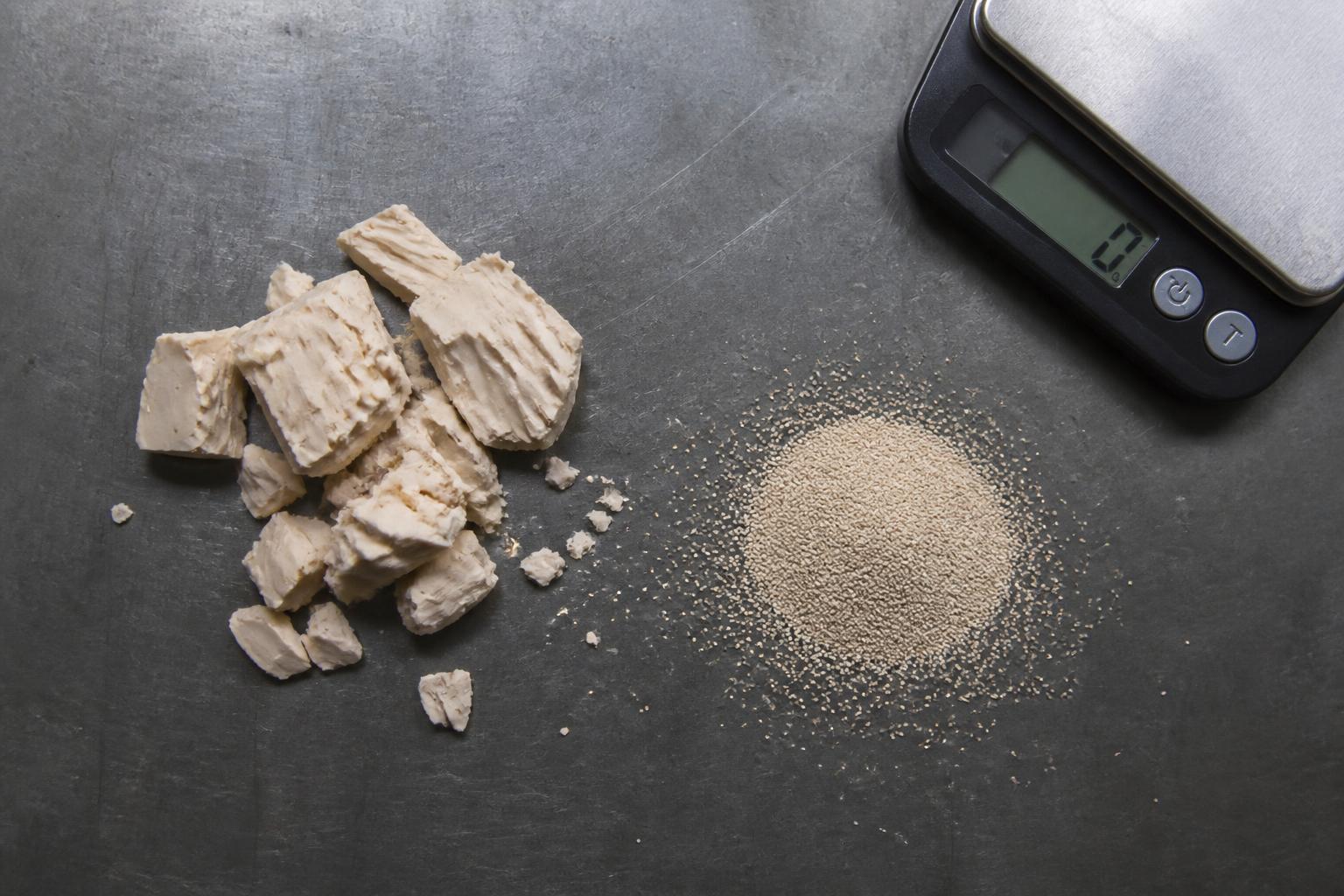
Three Types, One Job
All yeast does the same thing: eat sugar, produce CO₂ and alcohol. The difference is form factor and concentration.
Fresh Yeast (Cake Yeast)
- Appearance: Moist, crumbly block
- Shelf life: 2-3 weeks refrigerated
- Activation: Dissolves directly in water
- Flavor: Mildest, most "bready" taste
- Best for: Traditional pizza, bakeries, if you can find it
Active Dry Yeast
- Appearance: Small granules
- Shelf life: 1-2 years sealed
- Activation: Needs warm water (35-40°C) for 5-10 min
- Flavor: Slightly more yeasty
- Best for: Home baking when fresh isn't available
Instant (Rapid-Rise) Yeast
- Appearance: Fine powder
- Shelf life: 1-2 years sealed
- Activation: Mix directly into flour, no proofing needed
- Flavor: Most concentrated
- Best for: Convenience, same-day doughs
Conversion Ratios
| Fresh | Active Dry | Instant |
|---|---|---|
| 10g | 4g | 3.3g |
| 3g | 1.2g | 1g |
| 1g | 0.4g | 0.33g |
Does It Matter for Long Fermentation?
For 24h+ cold fermentation, the type barely matters. The tiny amount of yeast (0.1-0.5g) means the differences are negligible. Use whatever you have.