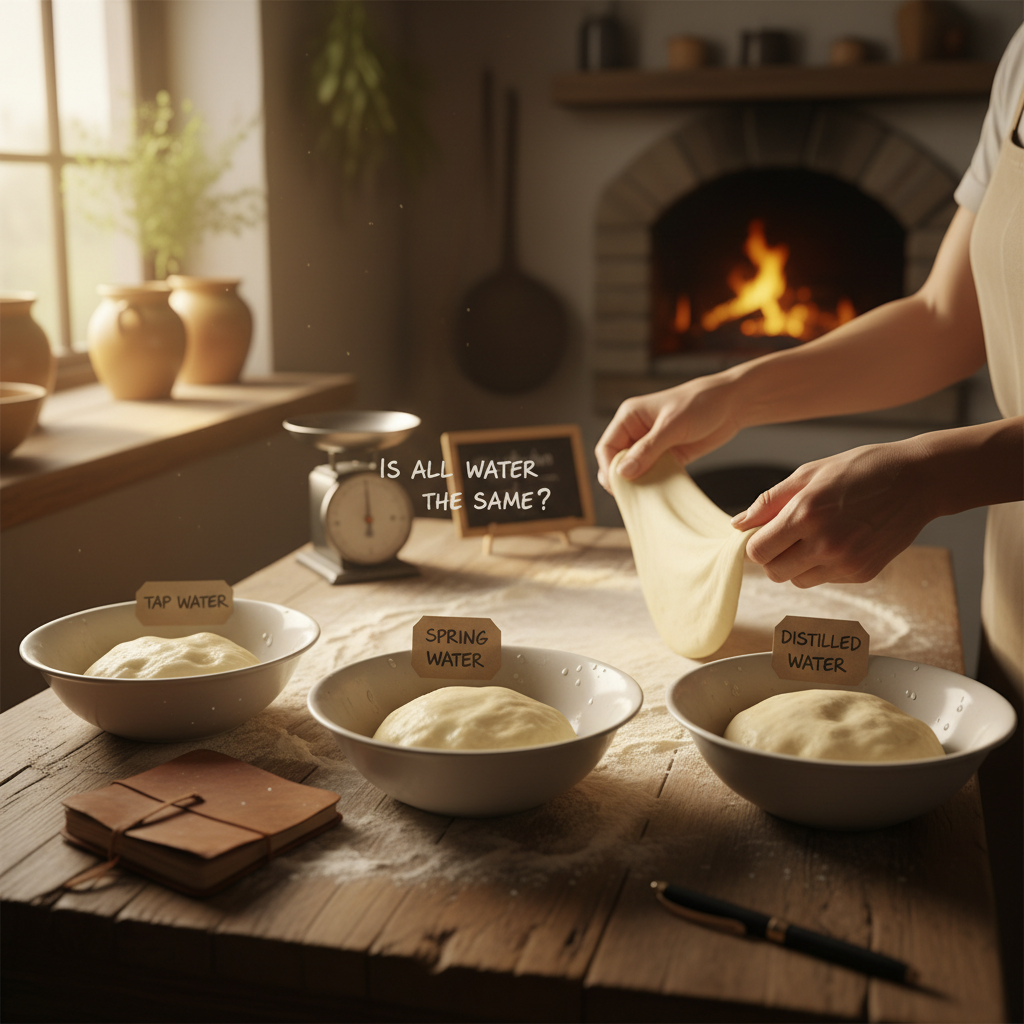
Not All Water Is Created Equal
Your tap water contains minerals, chlorine, and other compounds that directly affect gluten development and yeast activity.
Chlorine: The Yeast Killer
Municipal water often contains chlorine to kill bacteria — but it can also slow down your yeast.
Fix: Let tap water sit uncovered for 30 minutes, or use a simple carbon filter. Chloramine (used in some cities) doesn't evaporate — you need a filter for that.Water Hardness
- Soft water (low minerals): Dough can be slack and sticky. Gluten forms easily but lacks structure.
- Hard water (high minerals): Tightens the gluten. Dough is firmer, may need more hydration.
- Medium (50-150 ppm): The sweet spot for most doughs.
Mineral Content That Matters
- Calcium & Magnesium: Strengthen gluten structure
- Iron: Can discolor dough and affect flavor
- pH level: Slightly acidic water (pH 6-7) is ideal for yeast activity