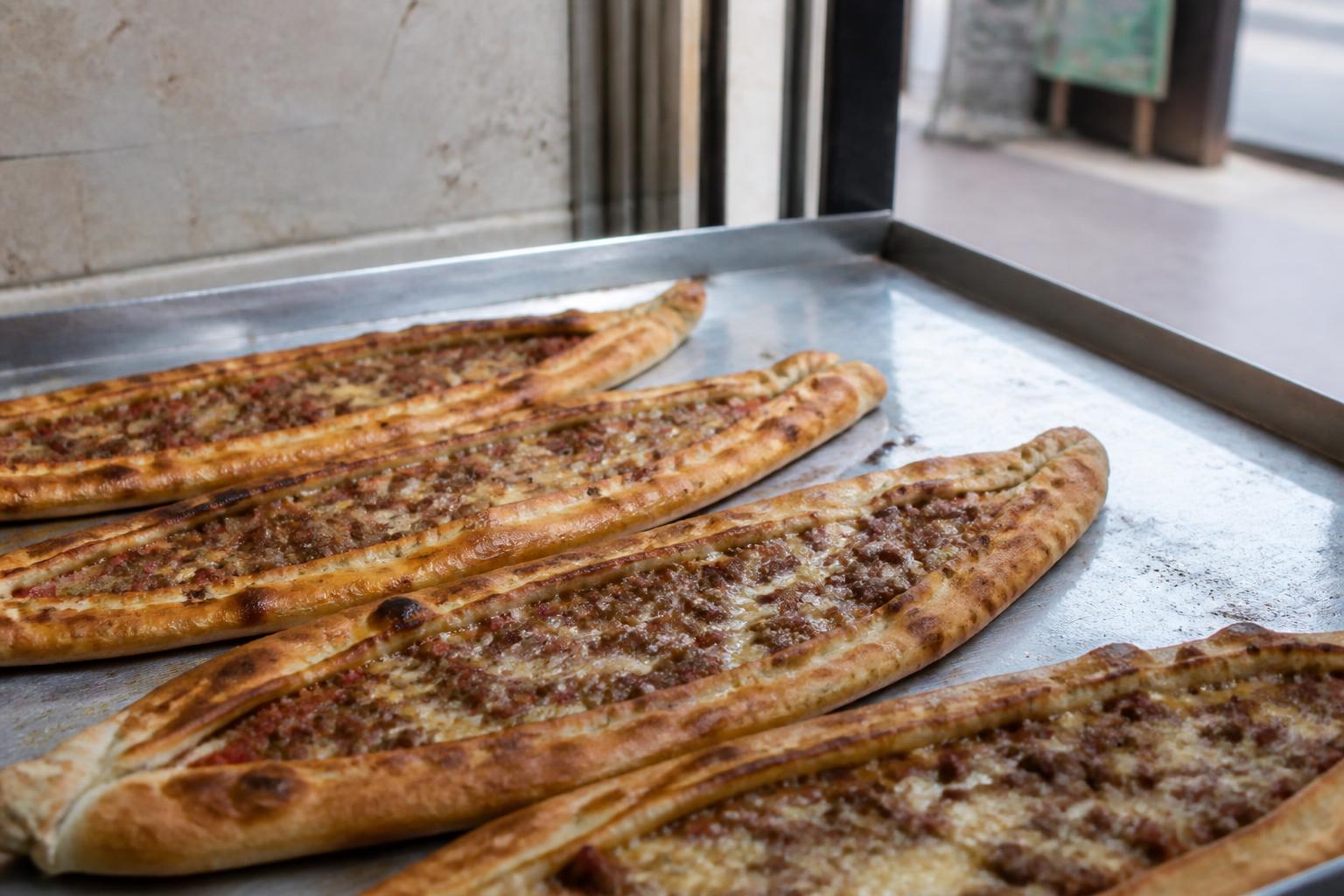
Pide: Turkey's Boat-Shaped Stuffed Pizza

Soft, pillowy dough shaped into an elegant boat, filled with cheese, meat, or egg – Turkish pide is comfort food elevated to art. Learn the enriched dough and signature boat-folding technique.

6 min2/16/2026
Pide: Turkey's Boat-Shaped Stuffed Pizza

Quick Answer

How is pide different from pizza?

Pide uses an enriched dough (with yogurt, oil, sometimes egg), is boat-shaped with raised edges, and typically features heartier fillings like cubed meat or cracked eggs. The texture is softer and more bread-like than pizza.

What Is Pide?

Pide (pronounced "pee-DEH") is a Turkish flatbread often called "Turkish pizza," though it's really its own thing entirely. Shaped like a boat with pointed ends and raised edges, it's filled with a variety of toppings and baked until golden.

The Dough: Soft and Enriched

Pide dough is richer than pizza dough:

  • 60–65% hydration
  • Yogurt (2–3 tablespoons per 500g flour) – adds tenderness and subtle tang
  • Olive oil or butter (2–3 tablespoons) – creates a soft, pliable crumb
  • Egg (optional, some recipes include one) – enriches the dough
  • Milk or milk powder (some recipes) – for a golden, softer crust

Fermentation

Pide dough doesn't need the long fermentation of pizza:

  • 1–2 hours at room temperature is standard
  • ✕ Overnight cold ferment works but isn't traditional
  • ✕ The dough should be soft, smooth, and slightly tacky

Shaping: The Boat

The signature boat shape requires practice:

  • Roll the dough into an oval, about 30×15cm
  • Add your filling down the center
  • Fold the long edges up and over the filling, leaving the center exposed
  • Pinch the two ends into sharp points – this creates the boat shape
  • The edges should be about 2cm high, creating walls to hold the filling
  • Optional: brush edges with egg wash for a golden shine
  • Classic Fillings

    • Kuşbaşılı: Cubed lamb or beef with tomatoes and peppers
    • Kaşarlı: Melted kaşar cheese (similar to aged mozzarella)
    • Kıymalı: Spiced ground meat with onions
    • Yumurtalı: Cheese with an egg cracked on top in the last 2 minutes of baking
    • Sucuklu: Cured spiced sausage with cheese

    Baking

    • Traditional: Stone oven at 280–300°C, 8–10 minutes
    • Home oven: 230–250°C on a preheated stone or steel, 12–15 minutes
    • Pro tip: Brush the baked pide with melted butter immediately when it comes out of the oven

    FAQ

    How is pide different from pizza?

    Pide uses an enriched dough (with yogurt, oil, sometimes egg), is boat-shaped with raised edges, and typically features heartier fillings like cubed meat or cracked eggs. The texture is softer and more bread-like than pizza.

    What cheese is traditional for pide?

    Kaşar cheese (aged Turkish cheese similar to provolone) is most traditional. For the stringy, melty filling, use a mix of low-moisture mozzarella and a sharper cheese like aged cheddar or Gruyère as substitutes.

    Can I make the boat shape without it opening up during baking?

    Pinch the ends firmly and make sure the dough isn't rolled too thin at the edges. Some bakers egg-wash the pinched ends to seal them. A slight opening during baking is normal and even desirable.

    Tools You'll Use

    Go to Flow

    Go to Flow · 1d

    Go to Flow

    STAY IN THE LOOP FOR BETTER PIZZA

    Tips on pizza dough, fermentation, hydration, and modern pizza styles. Plus: get free access to the first RISE Pizza Handbook PDF.