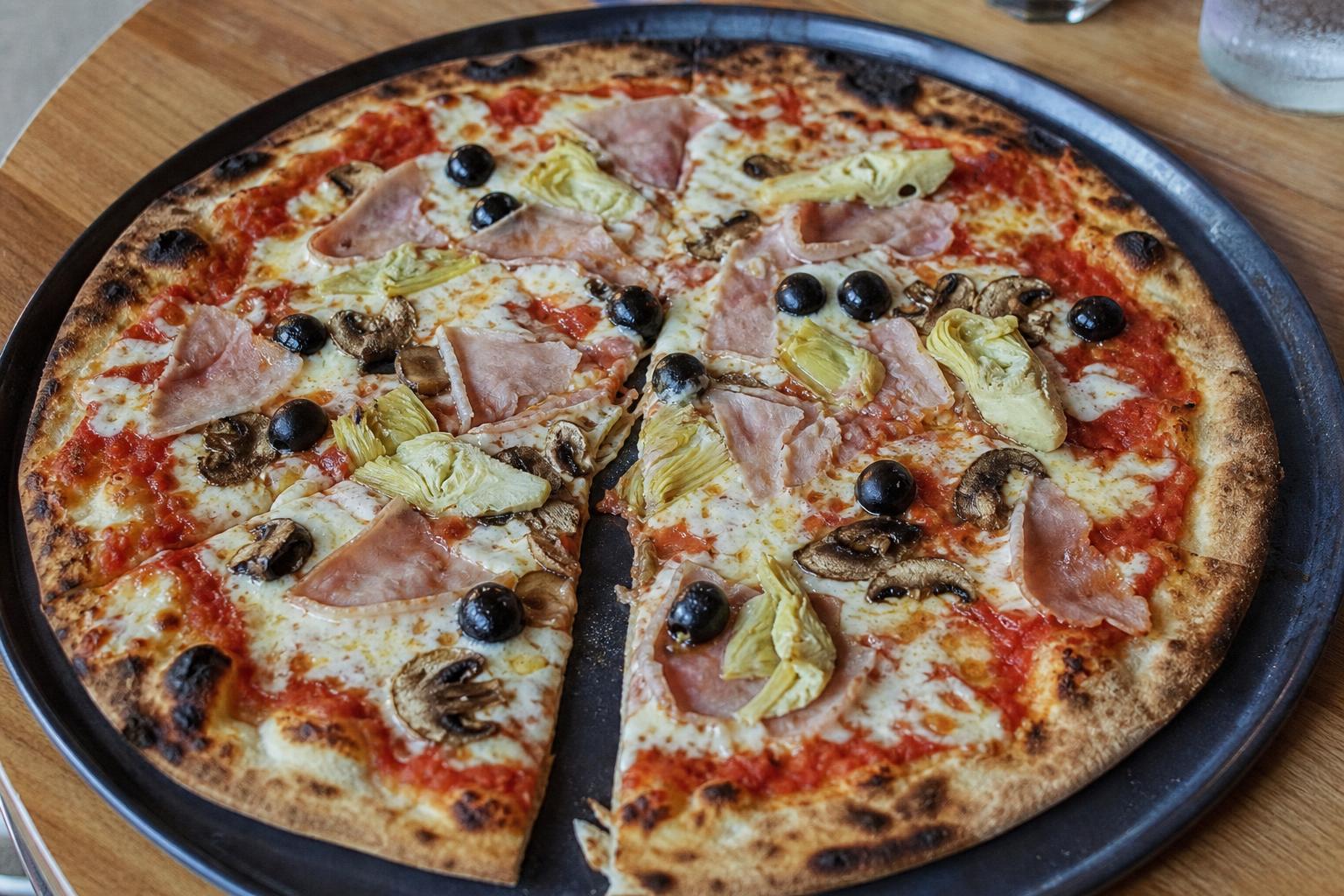
Pizza Tonda Romana: Rome's Paper-Thin Crispy Icon

The original Roman round pizza – ultra-thin, crispy (scrocchiarella), and lighter than air. Learn the low-hydration technique that creates a cracker-like base with charred bubbles.

6 min2/16/2026
Pizza Tonda Romana: Rome's Paper-Thin Crispy Icon

Quick Answer

What does scrocchiarella mean?

It comes from the Italian verb 'scrocchiare,' meaning to crunch or crackle. It describes the characteristic sound this pizza makes when you bite into it – a satisfying, shattering crunch.

What Is Tonda Romana?

Tonda Romana is Rome's answer to Neapolitan pizza: where Naples goes soft and puffy, Rome goes thin and crispy. Also called "scrocchiarella" (from the Italian scrocchiare – to crunch), this pizza shatters when you bite into it.

The Dough Philosophy

Everything about tonda romana dough is designed for crispness:

  • 55–62% hydration – deliberately low for a tight, rollable dough
  • Olive oil in the dough (3–5%) – creates tenderness within the crunch
  • Strong flour (W 260–300) – provides structure during the aggressive stretch
  • 24–72 hour cold fermentation – develops flavor without making the dough too elastic

Mixing and Fermentation

  • Mix all ingredients until smooth and elastic (this dough gets worked more than Neapolitan)
  • Bulk ferment 1–2 hours at room temperature
  • Ball and cold retard for 24–72 hours
  • Temper 2–3 hours before shaping
  • Shaping: The Rolling Pin Is Welcome

    Unlike Neapolitan pizza, where a rolling pin is heresy, tonda romana embraces it:

    • ✕ Start with hands to flatten the ball
    • ✕ Use a rolling pin to achieve an impossibly thin disk
    • ✕ The center should be nearly translucent – 2–3mm thin
    • ✕ The edge (cornicione) is minimal – just a slight lip, not a puffy rim
    • ✕ The final stretch often happens by draping over the fists and rotating

    Baking

    • Pizzeria oven: 300–350°C (570–660°F) for 2–3 minutes
    • Home oven: Max temperature (250–280°C) on a preheated steel or stone, 5–7 minutes
    • ✕ The pizza should have charred spots and bubble blisters across the surface
    • ✕ When done right, you can see the toppings through the base in spots

    Tonda vs. Neapolitan

    FeatureTonda RomanaNeapolitan
    CrustPaper-thin, crispySoft, chewy, puffy rim
    Hydration55–62%58–65%
    Oil in doughYesNo
    ShapingRolling pin OKHands only
    RimMinimalProminent cornicione
    Size30–35cm25–30cm
    TextureCrunchy, shatteringSoft, foldable

    FAQ

    What does scrocchiarella mean?

    It comes from the Italian verb 'scrocchiare,' meaning to crunch or crackle. It describes the characteristic sound this pizza makes when you bite into it – a satisfying, shattering crunch.

    Why is the hydration so low compared to other styles?

    Low hydration (55-62%) creates a tight, workable dough that can be rolled extremely thin without tearing. Higher hydration would make the dough too elastic and produce a chewier, softer result – the opposite of what tonda romana aims for.

    Can I make tonda romana in a home oven?

    Yes! While you won't get the 300°C+ of a pizzeria, a preheated pizza steel at maximum temperature (250-280°C) with the broiler on for the last minute works well. The thin base cooks quickly even at lower temperatures.

    Tools You'll Use

    Make Roman Tonda Dough

    Make Roman Tonda Dough · 1d

    Make Roman Tonda Dough

    STAY IN THE LOOP FOR BETTER PIZZA

    Tips on pizza dough, fermentation, hydration, and modern pizza styles. Plus: get free access to the first RISE Pizza Handbook PDF.