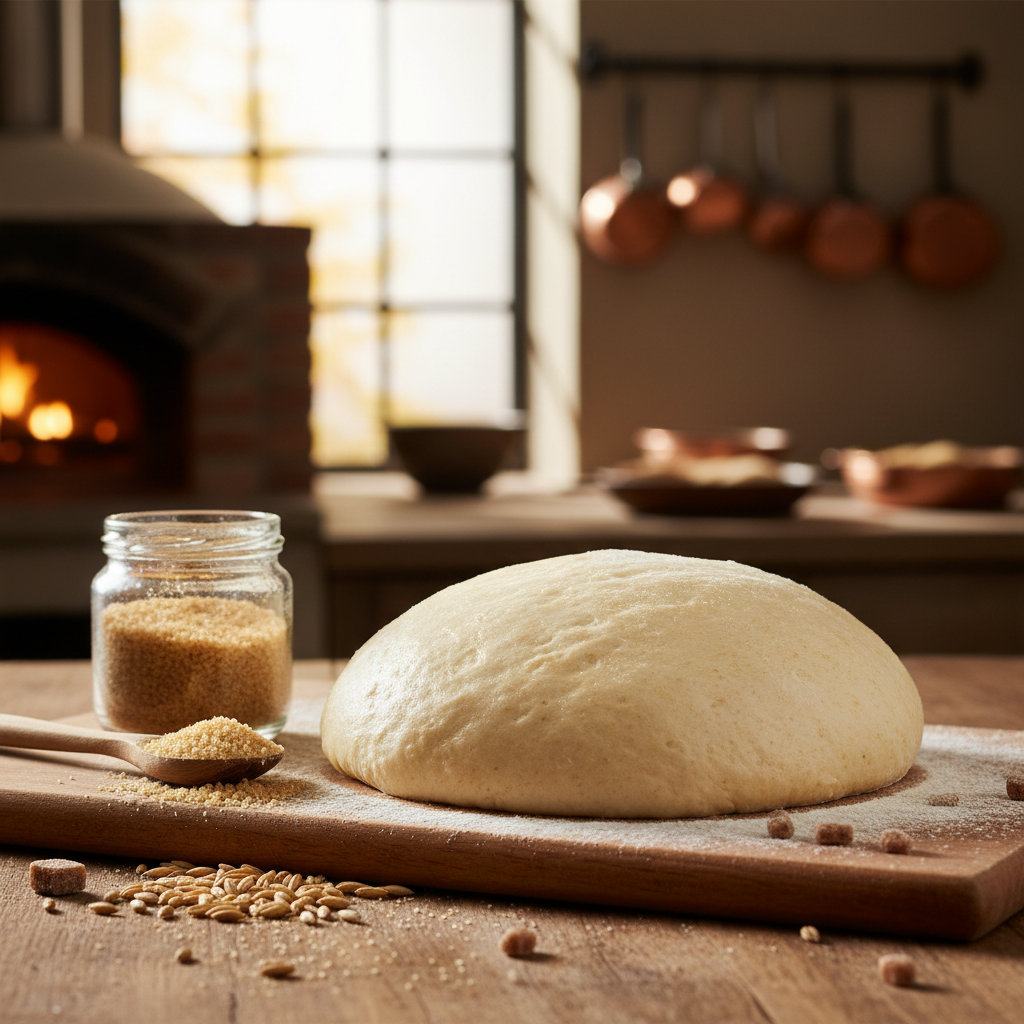
Sugar and Malt in Pizza Dough: Browning Science

Why some doughs need sugar or malt to brown properly — and why others don't.

5 min2/16/2026
Sugar and Malt in Pizza Dough: Browning Science

Quick Answer

Diastatic vs non-diastatic malt?

Diastatic has active enzymes that convert starch to sugar. Non-diastatic is just sweetener.

The Browning Problem

Pizza at 450°C+ browns in seconds. At 250-300°C in a home oven, it can look pale after 8 minutes. Sugar and malt solve this.

How Browning Works

Maillard Reaction

Amino acids + reducing sugars → brown compounds + flavor. Needs 140°C+ and available sugars.

Caramelization

Direct sugar breakdown at 160°C+.

Sugar in Dough

1-2% sugar is common in New York, Detroit, and American styles.

Diastatic Malt: The Pro Move

Diastatic malt powder contains active enzymes that break starch into sugars throughout fermentation:
  • ✕ Continuous supply of browning sugars
  • ✕ Enhanced yeast activity
  • ✕ More complex, nutty-sweet flavor
  • ✕ 0.5-1% is enough

When You Don't Need Sugar

  • Long cold fermentation (48h+) naturally produces sugars
  • Tipo 00 with diastatic enzymes
  • High-temperature baking (450°C+) — sugar can cause burning

FAQ

Diastatic vs non-diastatic malt?

Diastatic has active enzymes that convert starch to sugar. Non-diastatic is just sweetener.

How much sugar for home oven?

1-2% for visible browning. Or 0.5-1% diastatic malt for a professional result.

Tools You'll Use

Make Neapolitan Dough

Make Neapolitan Dough · 1d

Make Neapolitan Dough

STAY IN THE LOOP FOR BETTER PIZZA

Tips on pizza dough, fermentation, hydration, and modern pizza styles. Plus: get free access to the first RISE Pizza Handbook PDF.