Honest Start
Gluten-free pizza is not "normal pizza minus the wheat." It's a different process with a different goal. Drop that expectation and you'll make something genuinely good. Keep it, and you'll be disappointed.
Why It's a Different Animal
Gluten is what makes wheat dough stretchy, airy and chewy. Gluten-free flours (rice, tapioca, potato, corn) have none of it. So there is:
- No kneading — there's no gluten to build
- No folding, no stretching, no tossing — the dough is a thick paste, not an elastic ball
- No long cold ferment — one short rise is enough
Instead of gluten, you build structure with binders.
The Two Binders That Matter
- Psyllium husk — the hero. It forms a gel that traps gas and holds the dough together. About 3–4% of the flour weight.
- Xanthan gum — adds elasticity and stops crumbling. A little goes a long way (~1%).
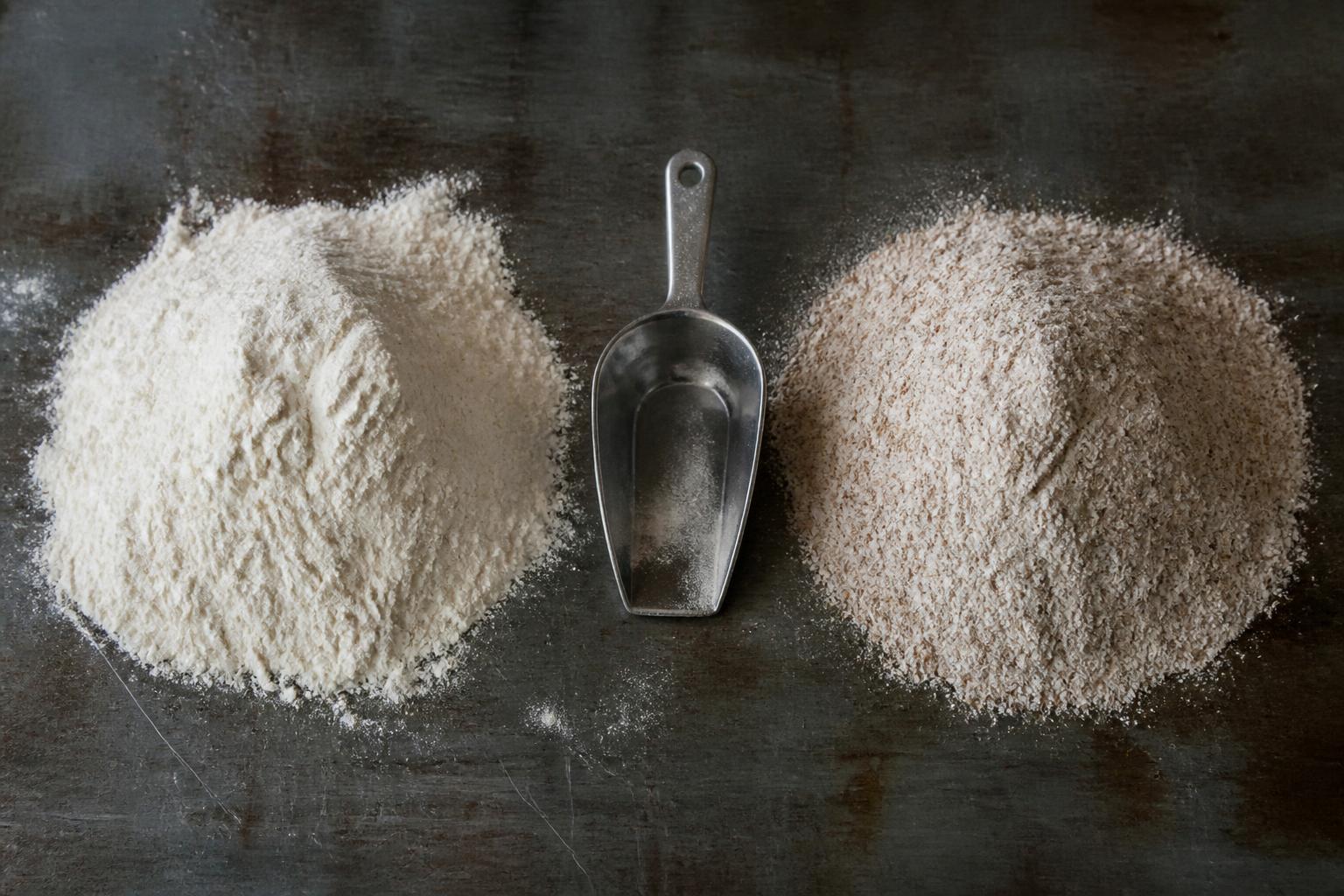
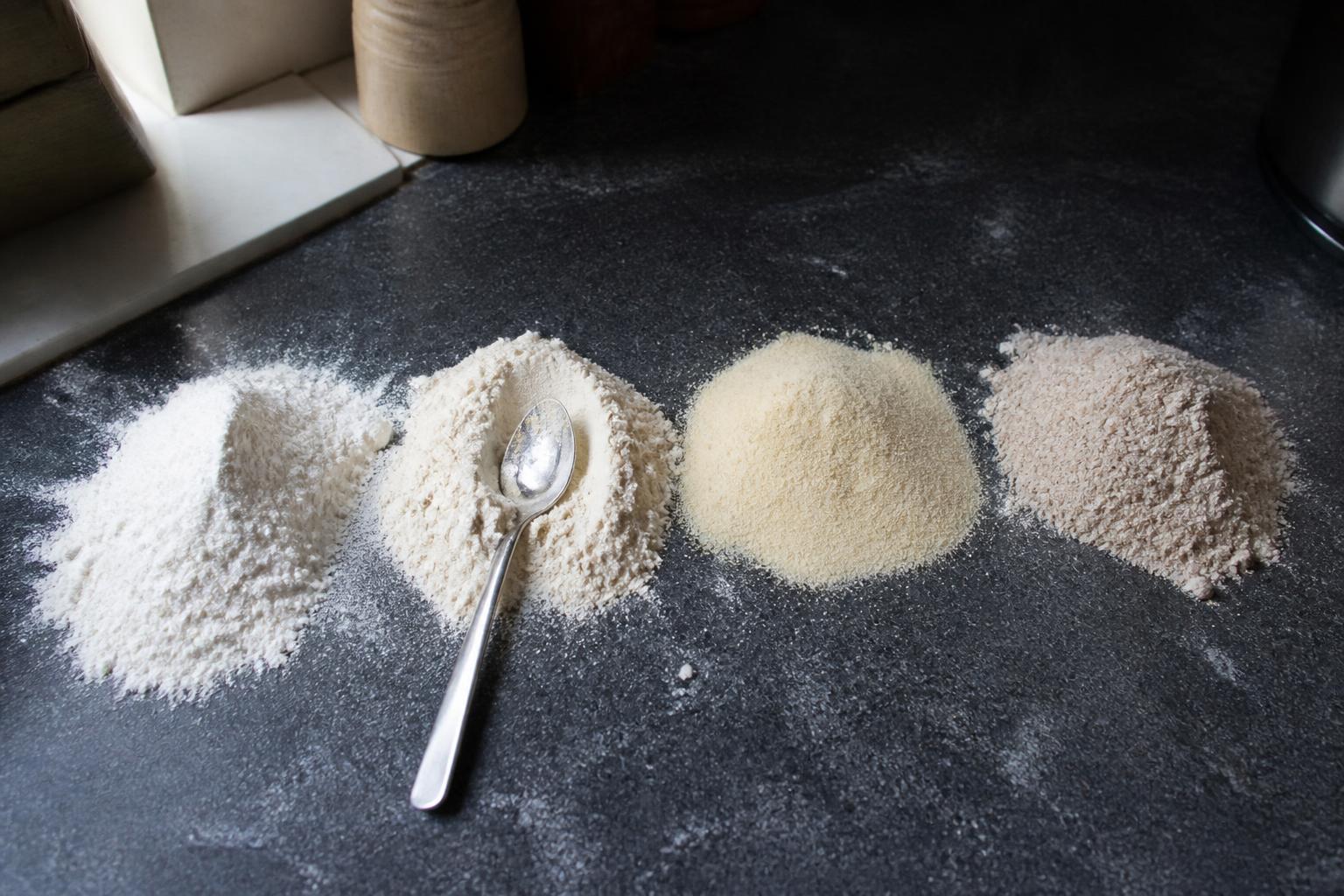
Use a ready-made gluten-free flour blend (rice + tapioca/potato) plus psyllium for the most reliable result.
How the Dough Behaves
- Wetter: 80–90% hydration is normal — the starches and psyllium drink a lot
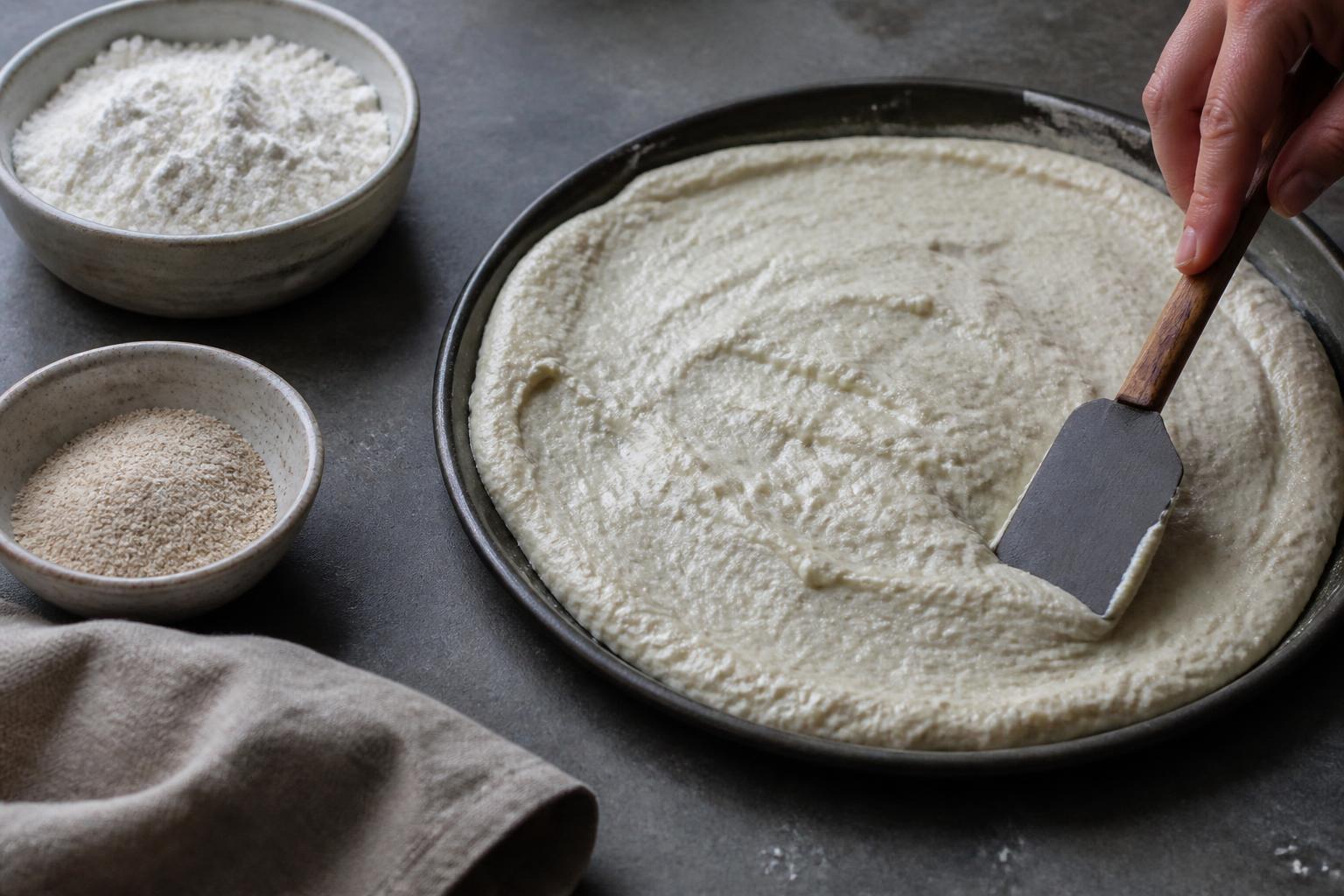
- Sticky and spreadable: you press and spread it onto parchment or into a pan, you don't stretch it
- Less rise: it puffs modestly, it won't double like wheat dough
The One Trick: Par-Bake
Bake the bare base for 5–7 minutes before adding toppings. This sets the crust and stops gluten-free pizza's classic failure — a gummy, undercooked middle under the sauce.
What You'll Get
A crisp-edged, tender base with a neutral flavor that lets the toppings lead. It won't have the chew of a Neapolitan cornicione — and that's fine. It's its own thing, and a good one.
Make It Step by Step
Want timings and amounts walked through live? The Dough Companion now has a dedicated gluten-free walkthrough — mixing, gel rest, single rise, wet shaping and par-bake, one screen at a time.