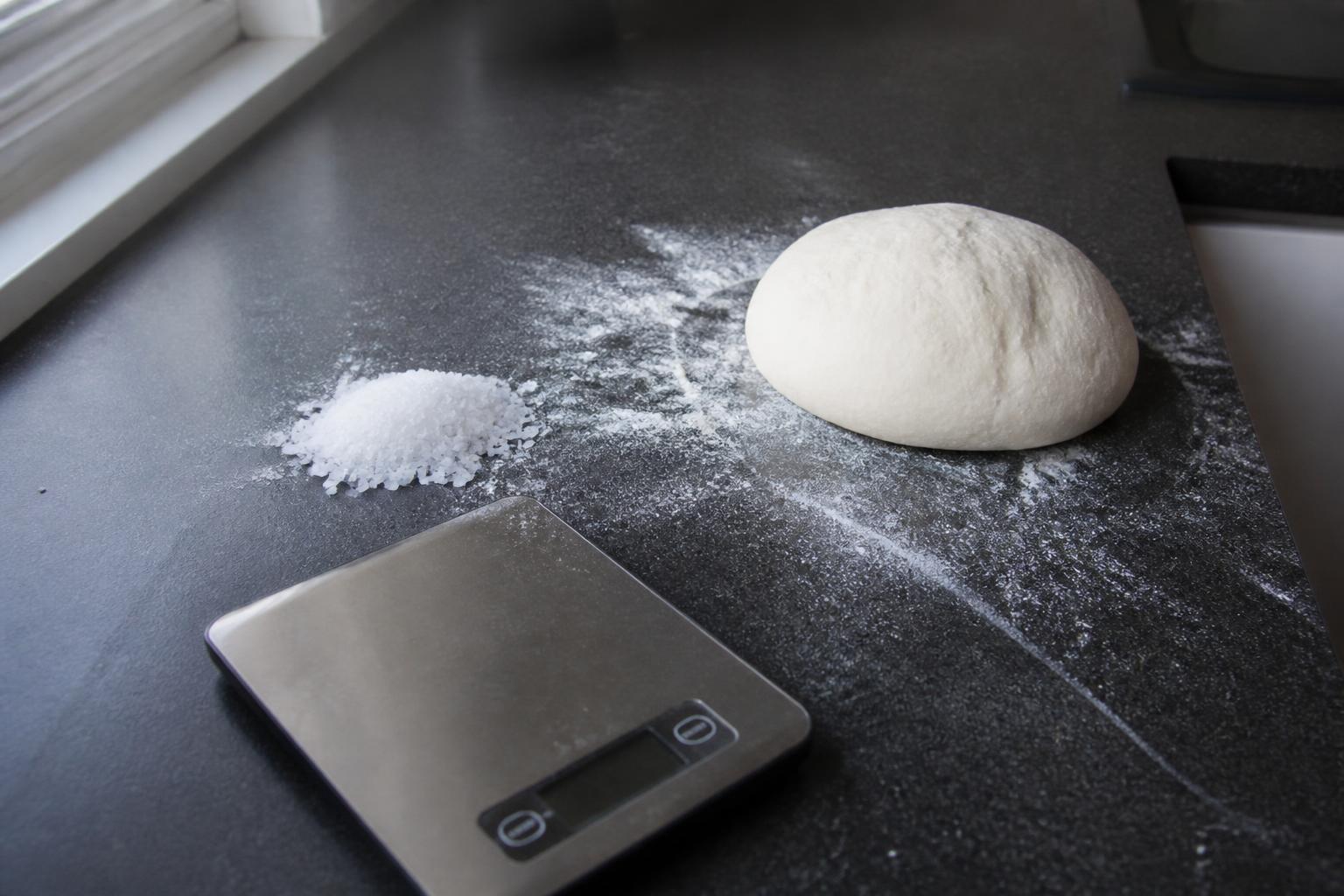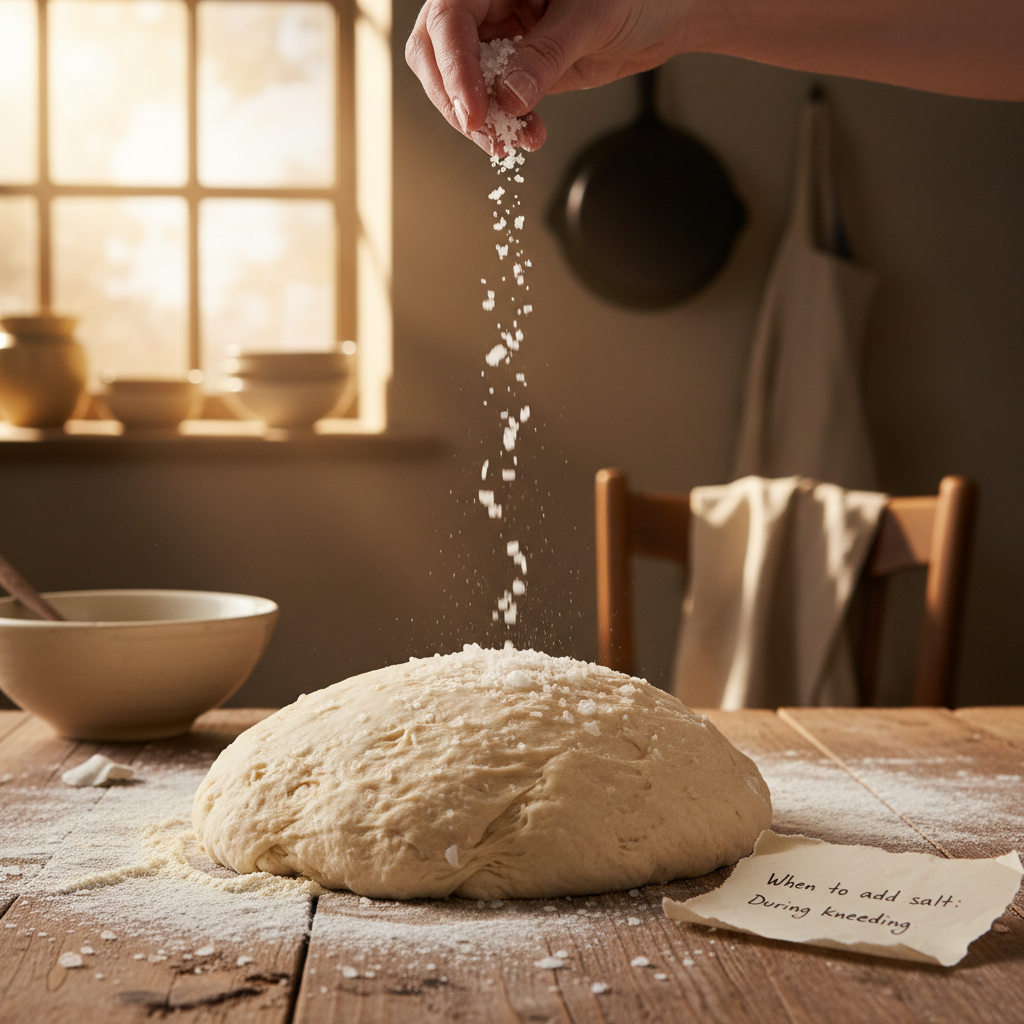
Salt Timing Changes Everything
When you add salt affects gluten development, fermentation speed, and final texture. It's not just an ingredient — it's a timing tool.
The Autolyse Technique
Mix only flour and water first. Wait 20–30 minutes. Then add salt and yeast.
Why it works:
- Flour hydrates fully without salt tightening the gluten
- Gluten starts forming naturally through enzyme activity
- Results in a more extensible, easier-to-shape dough
What Salt Does to Dough
Three Approaches
1. All at once (Simple)
Mix everything together. Works perfectly for same-day doughs and beginners.
2. Delayed salt (Autolyse)
Add salt after 20-30 min autolyse. Better extensibility, worth it for Neapolitan and long-ferment doughs.
3. Very late salt (Advanced)
Add salt after initial kneading. Maximum gluten development first, then tighten with salt. Used by some professional bakers.
When Does It Matter Most?
- High hydration doughs (65%+): Autolyse makes a noticeable difference
- Same-day quick doughs: Just mix everything, don't overthink it
- Long cold fermentation: Delayed salt gives you slightly more flavor complexity
The Bottom Line
For most home bakers: mix everything at once. For those chasing perfection: try a 20-minute autolyse.
Related Reading
This article is focused on timing — the autolyse technique and when salt hits the dough. For the full picture on how much salt to use, which salt type to buy, and what salt does to fermentation, gluten and flavor, see salt in pizza dough: how much, which type and when.