Salt: The Most Underrated Ingredient
Every pizza recipe lists salt, and most bakers just throw it in without thinking. But salt is arguably the most powerful ingredient in your dough after flour. Change the amount by even 0.5%, and you'll notice the difference. Change the timing of when you add it, and the dough behaves completely differently.
What Salt Actually Does
1. Controls Fermentation SpeedSalt is a natural yeast inhibitor. It slows fermentation by drawing water away from yeast cells through osmosis:
- No salt: Yeast runs wild, producing gas too fast, creating a bland, overproofed mess
- 2–3% salt: Yeast works at a controlled, steady pace
- Above 3.5%: Yeast activity drops sharply – the dough may not rise properly
This is why salt percentage and fermentation time are linked. More salt = slower rise = more time for flavor development.
2. Strengthens GlutenSalt tightens the gluten network by reducing the electrostatic repulsion between gluten proteins. In practical terms:
- Dough without salt feels slack, sticky, and tears easily
- Dough with salt is tighter, more elastic, and easier to shape
- The effect is immediate – you can feel the dough change when salt is added
But not just by making things "salty." Salt:
- Suppresses bitter flavors from flour
- Amplifies sweet and savory notes
- Creates the umami foundation that makes great pizza crust addictive
- Without salt, fermented dough tastes flat and slightly sour
Salt strengthens gluten, which traps sugars in the dough. These sugars are available for Maillard browning during baking. Well-salted dough browns more evenly and develops deeper color.
5. Extends FreshnessSalt binds water, slowing staling. A properly salted crust stays softer longer after baking.
The Salt Percentage Spectrum
| % (Baker's %) | Effect | Best For |
|---|---|---|
| 1.5–2.0% | Mild, faster ferment | Quick/same-day doughs |
| 2.5–3.0% | Balanced, standard | Most pizza styles |
| 3.0–3.5% | Assertive, slow ferment | Long cold ferments (48h+) |
| 3.5%+ | Very salty, yeast struggles | Not recommended |
When to Add Salt
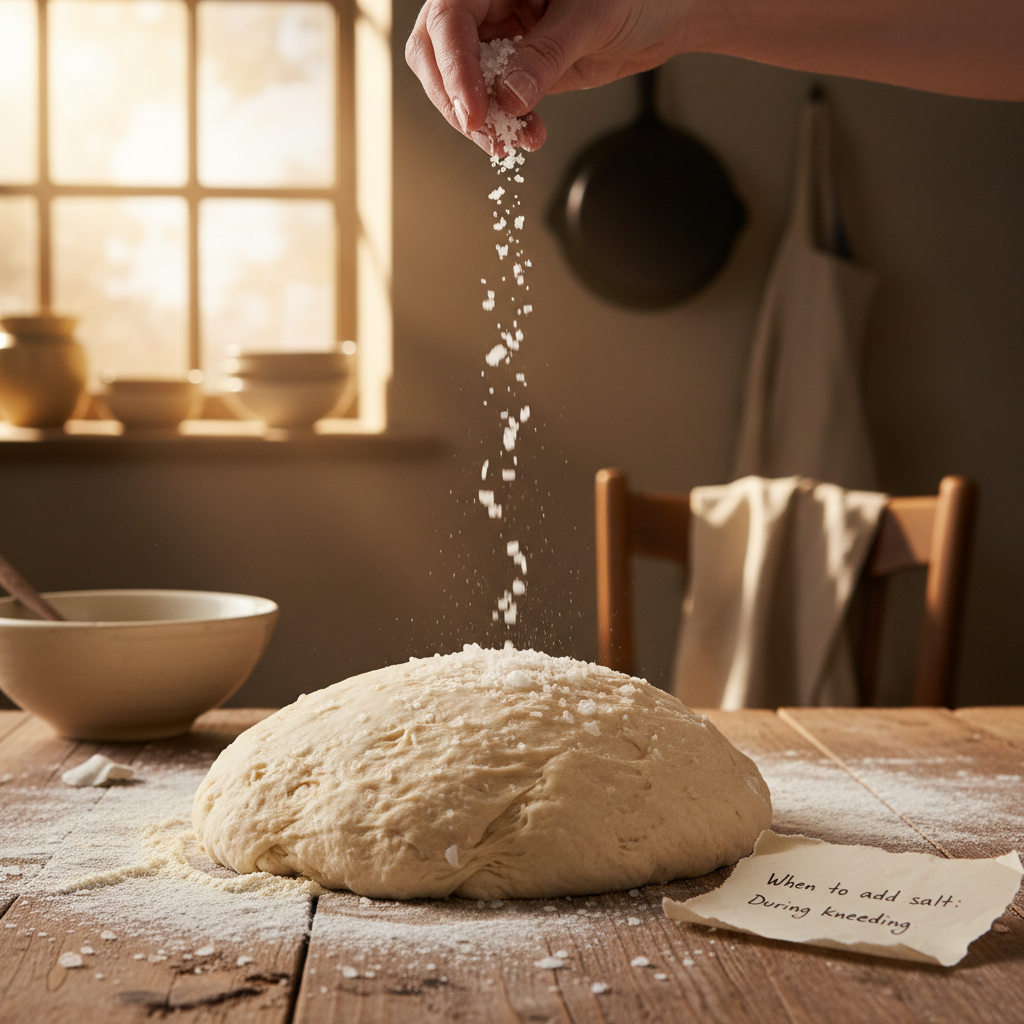
Late addition (after autolyse):Add salt 20–30 minutes after mixing flour and water. This gives gluten a head start developing without salt's tightening effect. The result: more extensible dough that's easier to stretch.
With everything else:Most home bakers add salt with all other ingredients. This is perfectly fine and simpler. The dough just needs slightly more mixing to develop.
Never add salt directly to yeast: While mixing them dry won't instantly kill yeast, direct contact with concentrated salt can damage yeast cells. Dissolve salt in water first, or add it to the flour.Salt Types for Pizza
The type of salt matters less than the amount — but a few choices affect how the dough behaves during mixing.
- Fine sea salt (recommended): Dissolves quickly and evenly, easy to measure precisely, clean flavor. This is the best all-around choice for pizza dough.
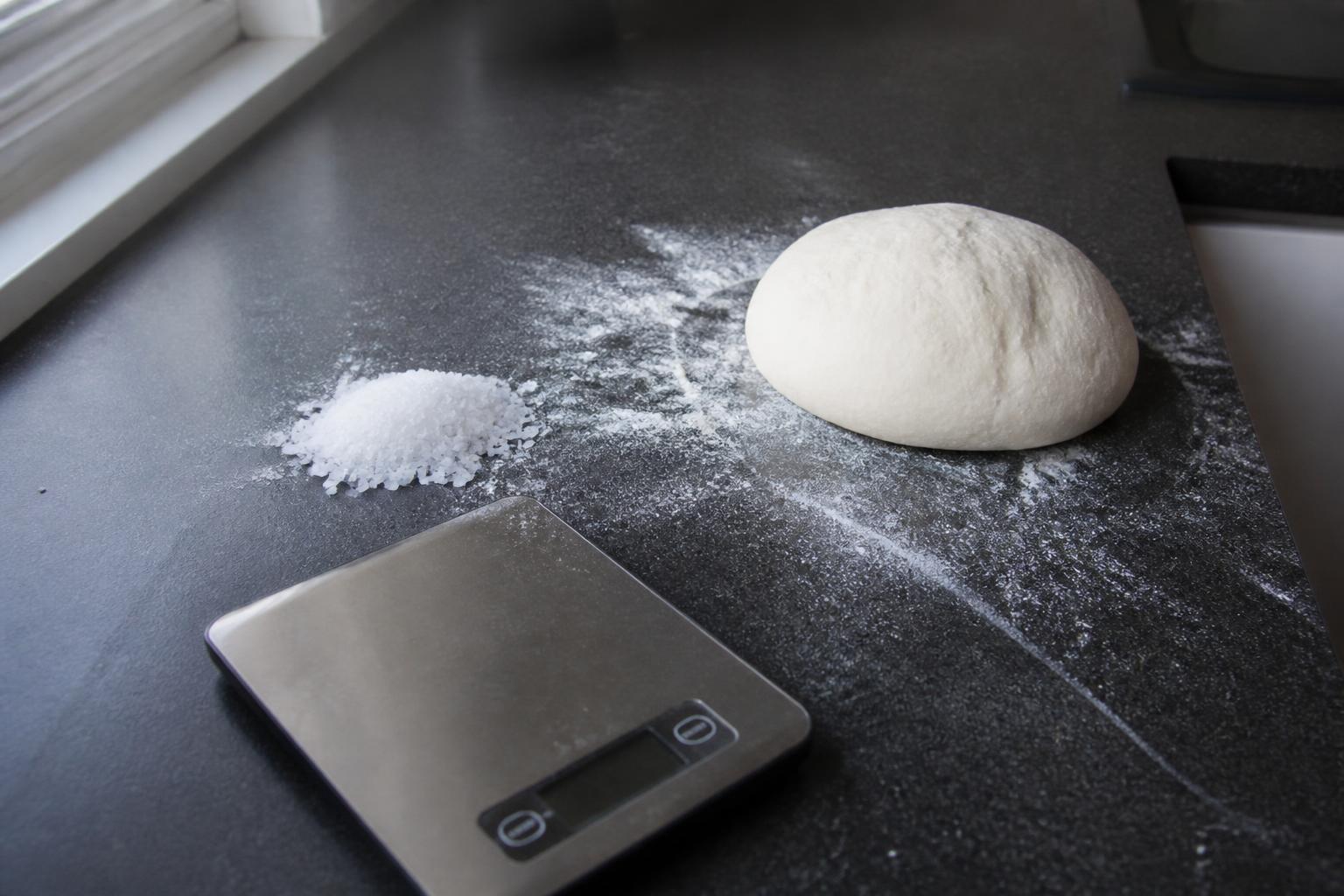
- Kosher salt: Larger crystals dissolve more slowly. A tablespoon of kosher salt weighs significantly less than a tablespoon of fine salt — always weigh it, never measure by volume, or the dough will end up dramatically under-salted.
- Table salt: Works fine. Contains anti-caking agents and often iodine. Purists avoid it, but the practical impact on a finished pizza is minimal.
- Flaky salt (Maldon, fleur de sel, etc.): Too expensive and too inconsistent in crystal size for dough. Save it for finishing after the bake.
When to Add Salt (Short Version)
Adding salt with everything else works for almost every home baker. Adding it after a 20–30 minute flour-and-water autolyse gives a slightly more extensible dough — useful for high-hydration styles. For the full breakdown of autolyse, delayed salt and "very late" salt techniques, see when to add salt to pizza dough.
The "Forgot the Salt" Test
If you've ever accidentally made dough without salt, you know: it's a completely different substance. The dough is slack, sticky, proofs too fast, and the baked result tastes like cardboard. This single experience teaches you more about salt's role than any article can. If you have made this mistake once, you never make it twice.
Experimenting with Salt
Try this: Make two identical doughs – one with 2% salt, one with 3%. Ferment them side by side. The 2% dough will be noticeably puffier after the same time. Bake them both. The 3% dough will have more color, more structure, and more flavor. Neither is "wrong" – they're different tools.