Pizza al Taglio: Rome's High-Hydration Masterpiece

The definitive guide to pizza al taglio – Rome's beloved "by the cut" pizza with its airy, focaccia-like crumb and crispy bottom. Master the high-hydration dough that made Gabriele Bonci famous.

7 min2/16/2026
Pizza al Taglio: Rome's High-Hydration Masterpiece

Quick Answer

What makes al taglio different from Sicilian pizza?

While both use pans, al taglio has much higher hydration (75-90% vs 60-65%), a lighter and more open crumb, and is traditionally sold by weight rather than by the slice. The texture is closer to ciabatta bread than the denser Sicilian style.

What Is Pizza al Taglio?

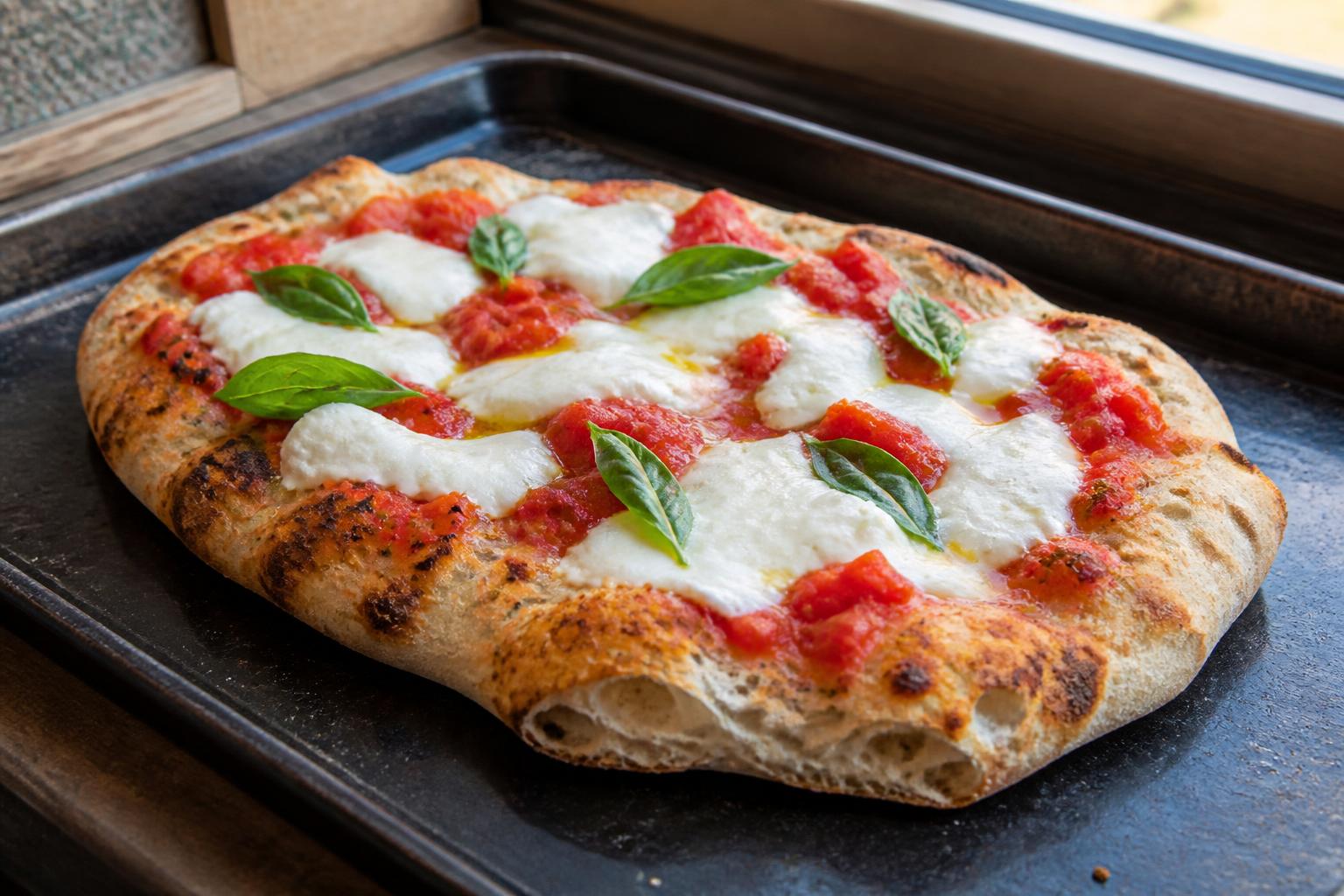
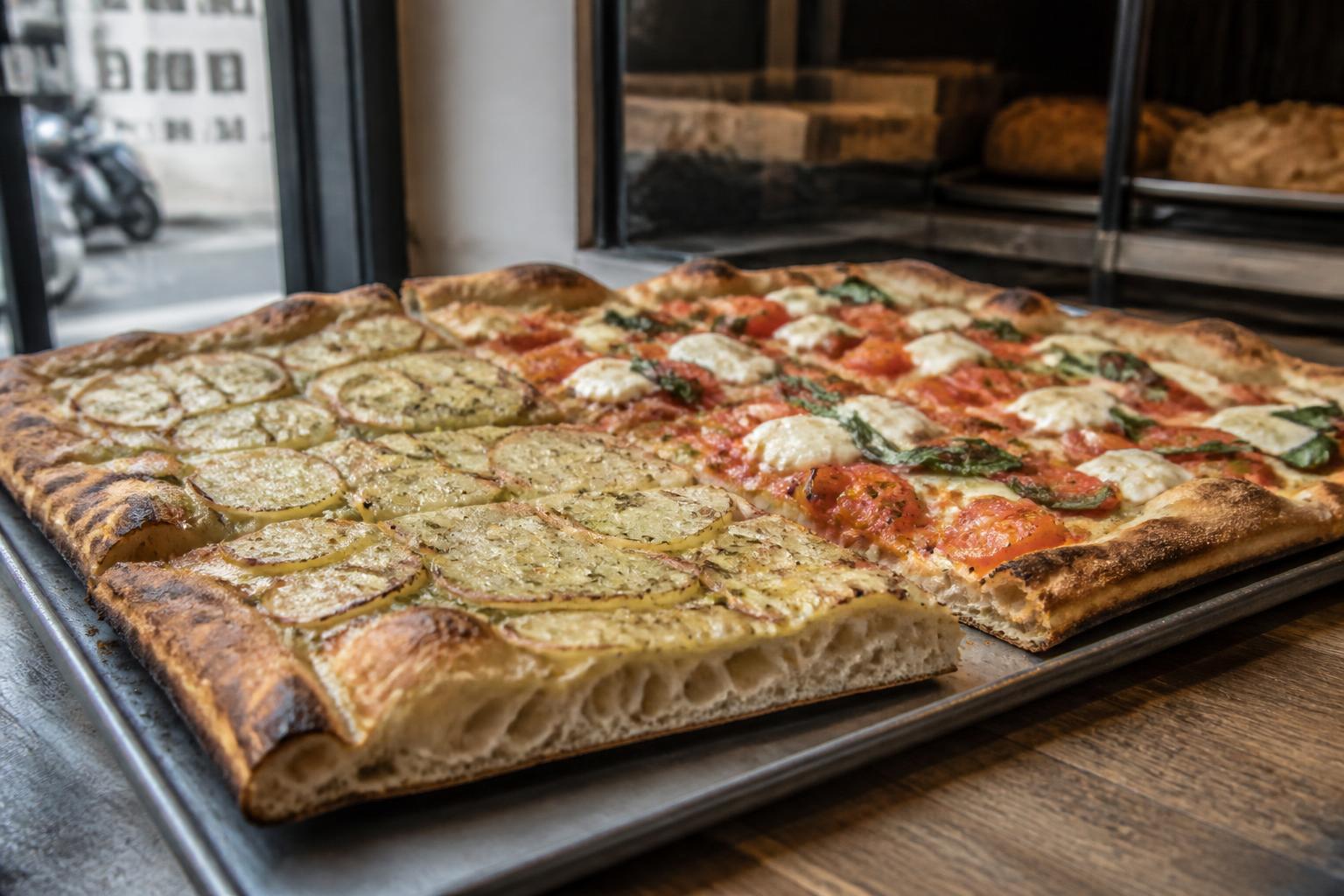
Pizza al taglio (literally "pizza by the cut") is Rome's street food icon. Sold by weight from large rectangular trays, it's cut with scissors and priced by the slice. What makes it special is the extraordinarily airy, open crumb hiding beneath a crispy, golden bottom.

Gabriele Bonci, often called the "Michelangelo of Pizza," elevated al taglio to an art form at his Pizzarium in Rome, pioneering ultra-high hydration doughs and creative seasonal toppings.

The Dough: High Hydration, Long Ferment

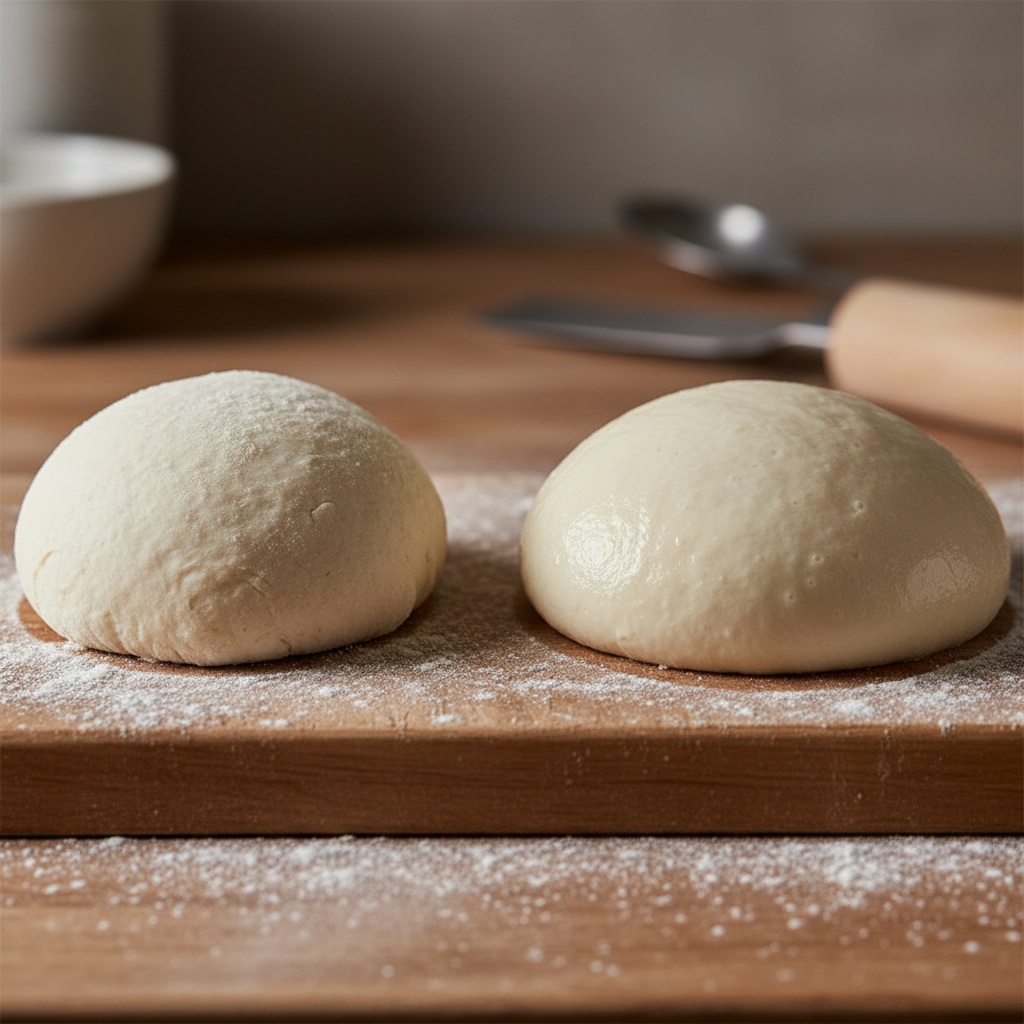
Al taglio dough is among the wettest pizza doughs you'll encounter:

  • 75–90% hydration (advanced bakers push even higher)
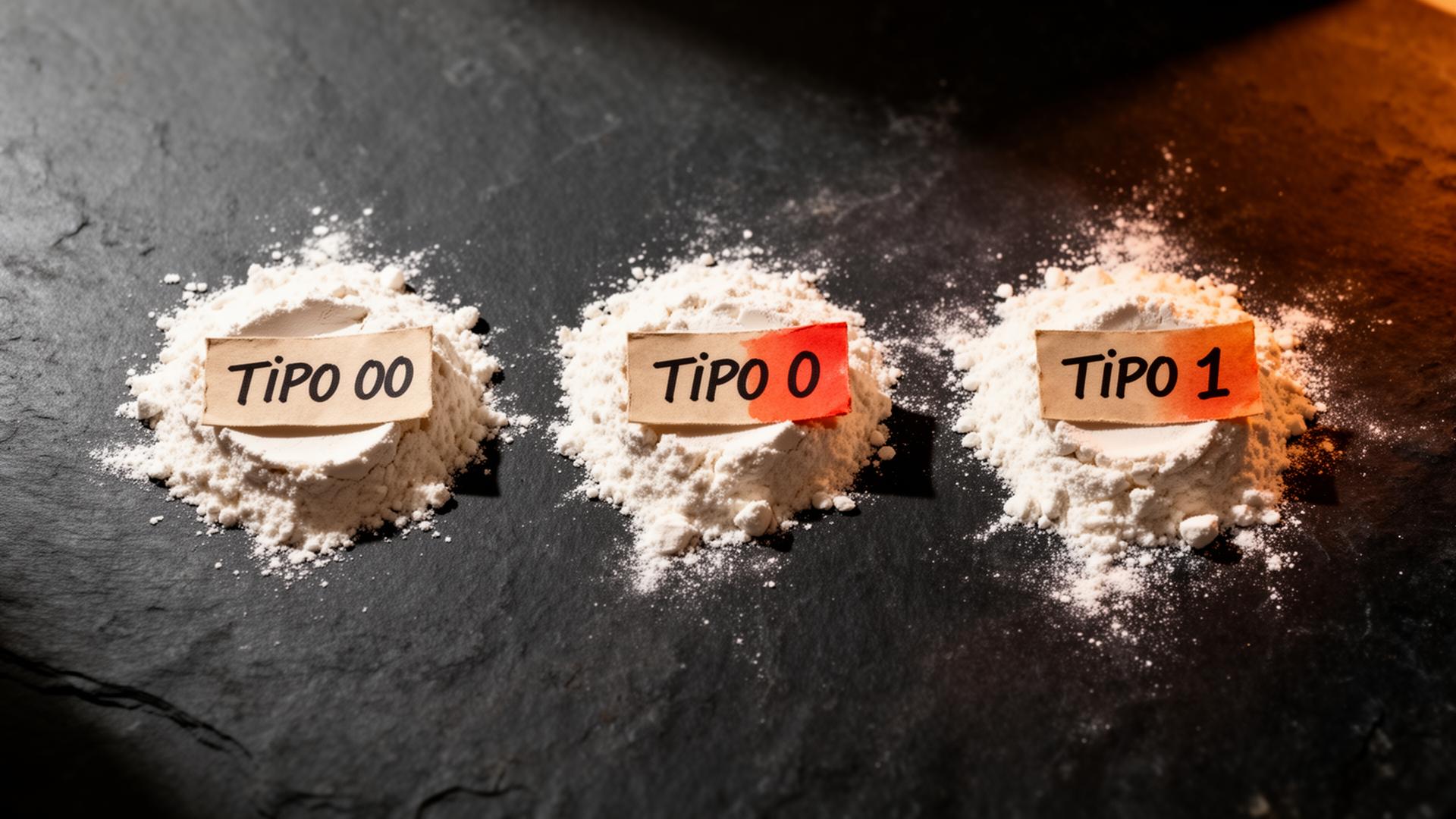
  • Strong bread flour (W 300–350, or high-protein bread flour at 13%+)
  • Very little yeast (0.1–0.3g per 100g flour)
  • Olive oil in the dough (2–5%) for tenderness
  • 24–72 hour cold fermentation for maximum flavor and digestibility

The Technique

Al taglio is forgiving in some ways and demanding in others:

  • Mix – combine flour, water (hold back 10–15% for bassinage), yeast, salt
  • Bassinage – gradually incorporate remaining water through stretch-and-folds
  • Bulk ferment – 2–3 hours at room temperature with folds every 30 minutes
  • Cold retard – 24–72 hours in the fridge
  • Pan it – oil a sheet pan generously, gently stretch the dough to fill it
  • Proof in pan – 1–2 hours until puffy and jiggly
  • Top and bake – some bakers par-bake, then top and finish
  • Baking

    • Home oven: 250–280°C (480–535°F) for 15–20 minutes
    • Pro tip: Place the pan on the lowest rack for the first 10 minutes (crispy bottom), then move up for the last 5 (golden top)
    • ✕ Some bakers do a double bake: par-bake plain, then top and rebake

    What Makes Great Al Taglio

    • The crumb: Wildly open, irregular holes – like ciabatta meets pizza
    • The bottom: Crispy and golden from the oiled pan, almost fried
    • The stretch: When you pick up a slice, it should feel light for its size
    • The toppings: Applied generously but thoughtfully – the dough is the star
    FAQ

    What makes al taglio different from Sicilian pizza?

    While both use pans, al taglio has much higher hydration (75-90% vs 60-65%), a lighter and more open crumb, and is traditionally sold by weight rather than by the slice. The texture is closer to ciabatta bread than the denser Sicilian style.

    Can I make al taglio without a stand mixer?

    Yes, and many purists prefer it. The stretch-and-fold method over 2-3 hours develops gluten beautifully in high-hydration doughs. It just requires patience and wet hands.

    Why is the dough so wet?

    High hydration creates the signature open, airy crumb. The water turns to steam during baking, creating large irregular holes. The strong flour provides enough gluten structure to hold it all together.

    Related

    Tools You'll Use

    Make Pizza al Taglio

    Make Pizza al Taglio · 1d

    Make Pizza al Taglio

    STAY IN THE LOOP FOR BETTER PIZZA

    Tips on pizza dough, fermentation, hydration, and modern pizza styles. Plus: get free access to the first RISE Pizza Handbook PDF.