Quick answer: Italian flour is graded by grind (Tipo 00, 0, 1, 2), German flour by ash content (Type 405, 550, 812, 1050) and American flour by protein (cake, all-purpose, bread). For pizza, match the flour's W-value or protein percentage to your fermentation length — not to the label on the front of the bag.
In one line per country:
- Italy: Tipo 00 pizza flour, W 260–360, 12.5–14% protein.
- Germany: Type 550 for same-day, Type 812 for 24–48 h, imported Caputo for true Neapolitan.
- USA: Bread flour around 12–13% protein for most styles; imported Italian Tipo 00 for Neapolitan.
Why Flour Confuses Everyone (and Why It Shouldn't)
Walk into any supermarket in Italy, Germany and the US and you will find three completely different flour systems on the shelf. None of them measure the same thing. "Tipo 00" tells you about grind. "Type 405" tells you about ash. "Bread flour" tells you about protein. Pick the wrong one for your pizza and the dough will fight you for hours.
This guide cuts through the noise: what each label actually means, what the W-value is, and how to translate between the three systems so you can buy the right bag — wherever you are.
Italian Flour: Tipo 00, 0, 1, 2 and Integrale
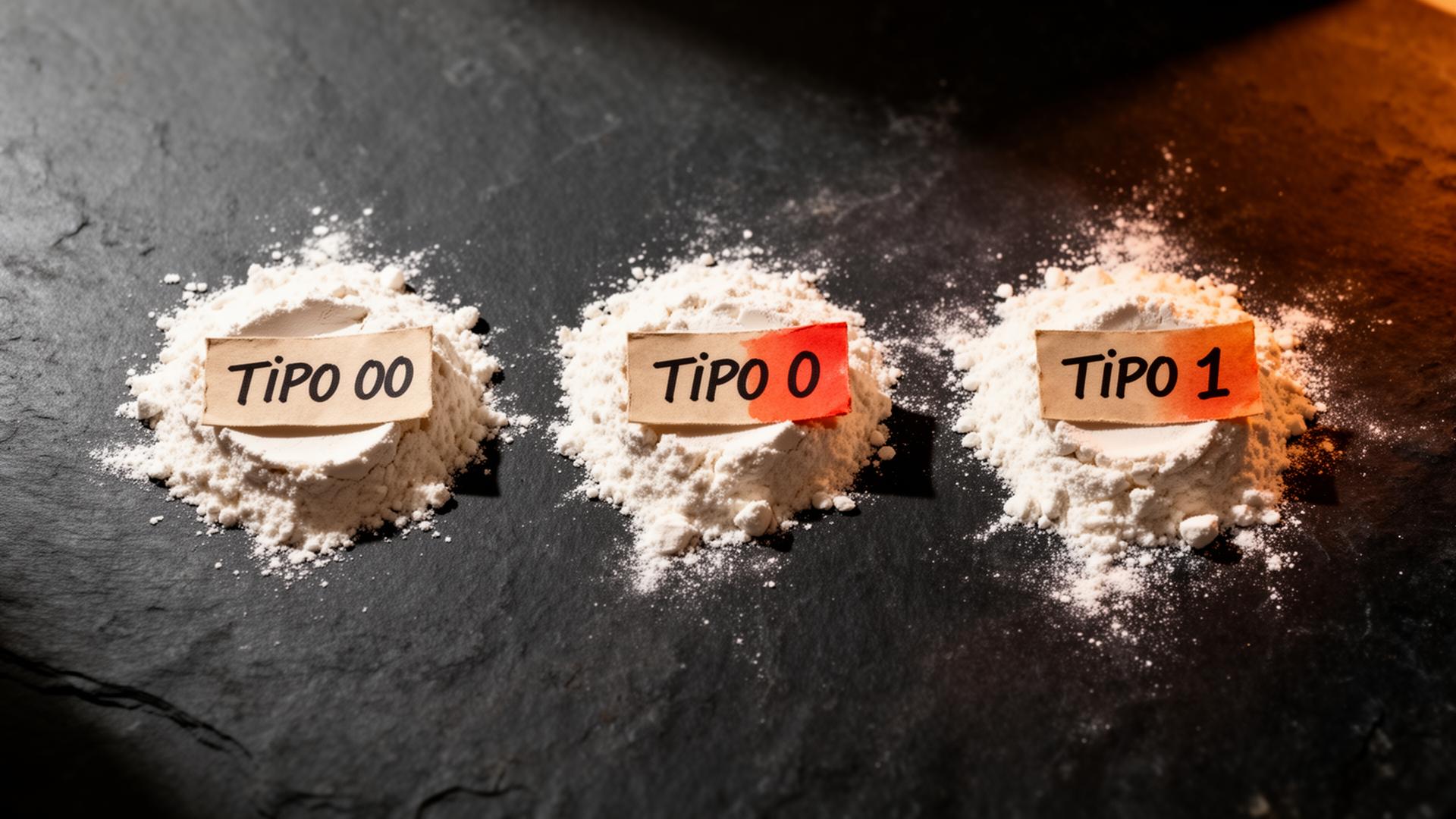
Italian flour grades describe how finely the wheat is milled and how much of the bran was sifted out. They say nothing about protein.
| Type | Texture | Ash (max) | Typical use |
|---|---|---|---|
| Tipo 00 | Powder-fine, almost talc | 0.55% | Neapolitan pizza, fresh pasta, cakes |
| Tipo 0 | Fine, slightly coarser | 0.65% | Pizza in teglia, bread, longer ferments |
| Tipo 1 | Visible specks of bran | 0.80% | Rustic pizza, sourdough, pinsa |
| Tipo 2 | Coarse, semi-wholegrain | 0.95% | Country bread, high-flavor pizza |
| Integrale | Wholegrain | up to ~1.7% | Wholewheat bread, blends |
So Tipo 00 is "The Best"?
No. Tipo 00 is just the finest grind. A Tipo 00 cake flour and a Tipo 00 pizza flour share the grade but behave nothing alike — because the protein and the W-value are different. Always read the second label on the bag: the technical data.
The W-Value: Flour's Real Strength Rating
The W-value (sometimes "W index" or "alveographic strength") is the single most useful number on a bag of Italian pizza flour. It measures how much work is needed to inflate a thin sheet of dough until it bursts, using a Chopin alveograph.
Simply put: higher W = stronger gluten = longer fermentation possible.
| W-value | Strength | Best for | Max ferment |
|---|---|---|---|
| W 90–160 | Weak (deboli) | Cakes, biscuits, short doughs | up to 4 h |
| W 160–250 | Medium | Same-day pizza, focaccia, ciabatta | 4–12 h |
| W 250–310 | Strong (forti) | 24–48 h pizza, classic Neapolitan | 12–48 h |
| W 310–370 | Very strong | 48–72 h cold ferment, panettone, biga | 48–72 h+ |
| W 370+ | Special / "Manitoba" | Blends, very long ferments, brioche | 72 h+ |
How the W-Value Is Measured
The Chopin alveograph test is brutally physical:
Two other numbers come from the same test and matter for pizza:
- P — tenacity (resistance to stretching)
- L — extensibility (how far the dough stretches before tearing)
- P/L ratio — balance between the two. 0.45–0.60 is the sweet spot for pizza. Above 0.7 the dough snaps back; below 0.4 it tears.
W-Value vs. Protein: They Are Not the Same
Protein percentage tells you how much gluten-forming protein is in the flour. The W-value tells you how good that protein is at building a strong, elastic network.
Two flours can both have 13% protein but very different W-values, depending on the wheat variety and how it was grown. For pizza, W is the more honest number — but you will mostly see it on Italian bags. Outside Italy, protein percentage is your best proxy.
Fermentation Time × W-Value: The Cheat Sheet
Match your flour to your schedule, not the other way around.
| Your plan | Target W | Target protein |
|---|---|---|
| Same-day, 4–8 h at room temp | 220–260 | 11–12% |
| 24 h (mostly cold) | 260–300 | 12–13% |
| 48 h cold ferment | 300–340 | 13–14% |
| 72 h cold ferment or biga/poolish | 340+ | 14%+ |
German vs. Italian vs. American Soft Wheat Flour
All three countries grade flour differently. Here is a practical translation table for soft wheat (Triticum aestivum) — the wheat used for pizza, bread and pastry.
Flour Translation Table — IT / DE / US
Click a row for details. Same row = roughly equivalent flour grade.
| Italy | Germany | USA | Mineral content | Protein | Pizza Fit |
|---|---|---|---|---|---|
| Tipo 00 (pizza, W 280–360) | Type 550 (stark) — NICHT 405 | Bread flour / High-gluten | 0.45–0.55% | 12–13% | Ideal |
| — (no IT equivalent) | Type 405 | Cake / Pastry | 0.45–0.55% | 9–10% | Avoid |
| Tipo 0 | Type 550 | All-purpose | 0.55–0.65% | 11–12% | Good |
| Tipo 0 strong | Type 812 | Bread flour | 0.65–0.80% | 12–13.5% | Ideal |
| Tipo 1 | Type 1050 | First-clear / High-extraction | 0.80–0.95% | 12–14% | Good |
| Tipo 2 | Type 1600 | High-extraction | 0.95–1.20% | 13–14% | Possible |
| Integrale | Vollkorn | Whole wheat | full grain | 13–15% | Possible |
| Italy | Germany | USA | Ash | Typical protein | Pizza fit |
|---|---|---|---|---|---|
| Tipo 00 (pizza) | Type 405 (cake) ⚠️ | Cake / Pastry flour | ~0.45–0.55% | IT pizza: 12–13% / DE 405: 9–10% | Only IT 00 pizza — not DE 405 |
| Tipo 0 | Type 550 | All-purpose | ~0.55–0.65% | 11–12% | Same-day pizza, focaccia |
| Tipo 0 strong | Type 812 | Bread flour | ~0.65–0.80% | 12–13.5% | 24–48 h pizza |
| Tipo 1 | Type 1050 | First-clear / High-extraction | ~0.80–0.95% | 12–14% | Rustic pizza, sourdough |
| Tipo 2 | Type 1600 | High-extraction | ~0.95–1.20% | 13–14% | Pinsa, country pizza |
| Integrale | Vollkorn | Whole wheat | full grain | 13–15% | Blends |
The Trap Most People Fall Into
Tipo 00 ≠ Type 405. They look similar (both pale, both fine), but:- Italian Tipo 00 pizza flour is milled from strong wheat with 12–13% protein and a W of 260–340.
- German Type 405 is milled from soft wheat with ~9.5% protein and almost no strength. It is for cakes.
Using Type 405 for Neapolitan pizza is the single most common reason German home bakers complain about "torn, leathery dough."
What to Buy Outside Italy
- Germany: Look for Type 550 (same-day) or Type 812 (24–48 h). For genuine Neapolitan, buy imported Caputo Pizzeria, Cuoco or 5 Stagioni Pizza Napoletana.
- USA: Bread flour (~12–13% protein) covers most pizza styles. King Arthur Bread Flour or Central Milling Type 00 are reliable. For Neapolitan, again, imported Italian Tipo 00 is the gold standard.
- UK: Strong white bread flour = roughly Italian Tipo 0. For 00, buy imported.
How to Read an Italian Flour Bag in 30 Seconds
The front says "Farina di grano tenero Tipo 00." That is just the grade. Flip to the side panel and look for:
If those four numbers match your plan, you bought the right bag.
Quick-Pick Recommendations by Style
- Neapolitan, 24 h: Tipo 00, W 260–300, 12.5–13% protein. Caputo Pizzeria is the classic.
- Neapolitan, 48–72 h cold: Tipo 00, W 320–360. Caputo Cuoco, 5 Stagioni Manitoba blend.
- Roman al taglio (high hydration): Tipo 0 or Tipo 1, W 300–340.
- NY style: US bread flour, 12.5–13.5% protein.
- Pinsa Romana: Blend of Tipo 0, rice flour and soy — or pre-mixed Pinsa flour.
- Sourdough pizza: Tipo 1 or a 70/30 blend of Tipo 00 + Tipo 1 for flavor.
The honest truth: there is no single "best pizza flour." There is the right flour for your fermentation schedule and your style — and now you know how to find it.