Why Sourdough Pizza?
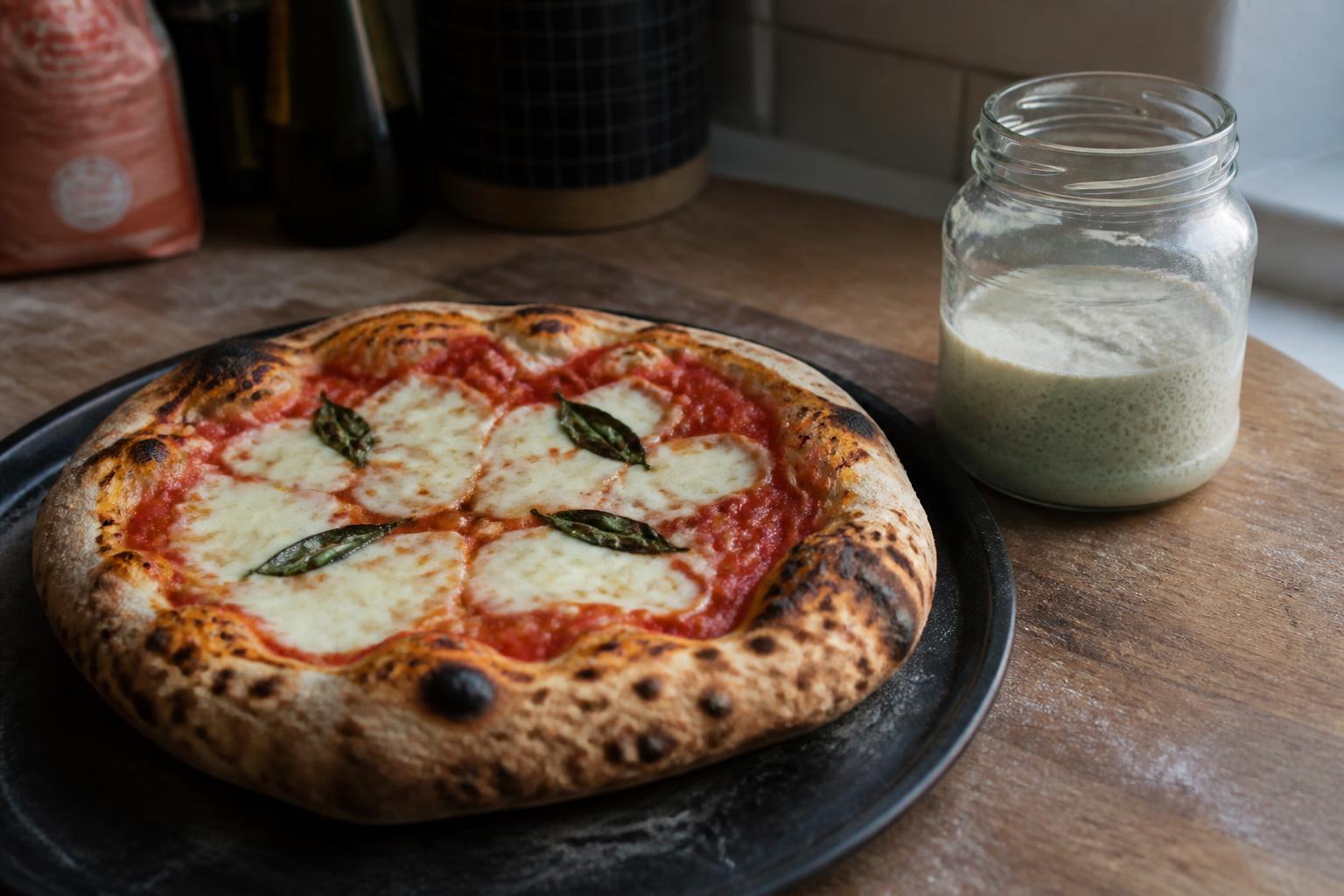
Sourdough pizza replaces commercial yeast with a natural sourdough starter (levain) – a living culture of wild yeasts and lactic acid bacteria. The result is a dough with more complex flavor, better digestibility, and a subtle tang that commercial yeast can't replicate.
What You Need
An active sourdough starter at 100% hydration (equal parts flour and water by weight). It should double in size within 4–6 hours after feeding. If your starter can't do this, it's not ready for pizza.The Conversion Formula
To convert any pizza recipe to sourdough:
- Starter: 200g (= 100g flour + 100g water)
- Remaining flour: 900g
- Remaining water: 550g (650g total - 100g in starter)
- Salt: 28g (2.8%)
Timing Is Different
Sourdough ferments slower and less predictably than commercial yeast. Key differences:
- Bulk fermentation: 4–8 hours at room temperature (vs. 2–3 hours with yeast)
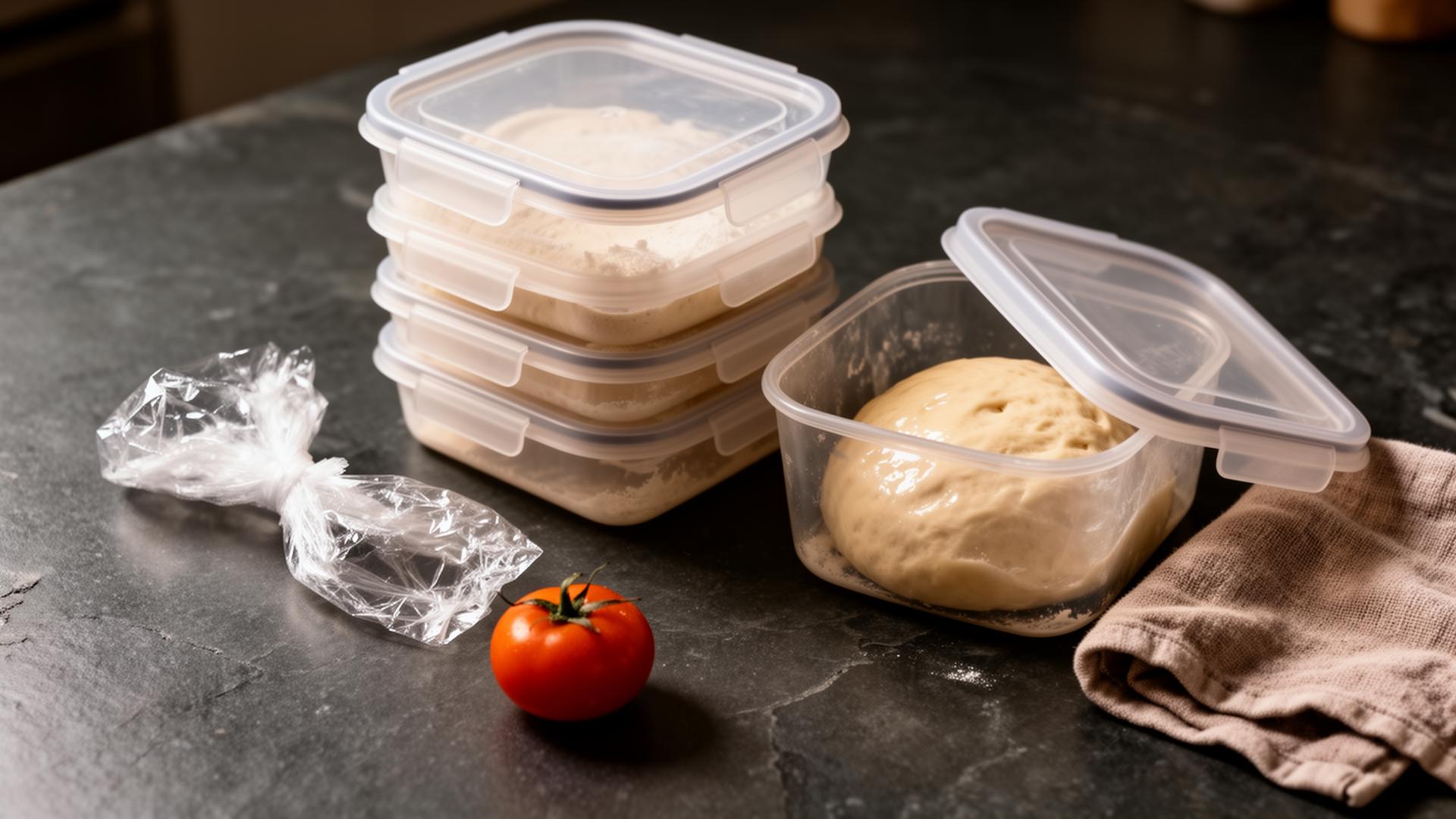
- Cold retard: 12–48 hours (works beautifully, and the tang mellows)
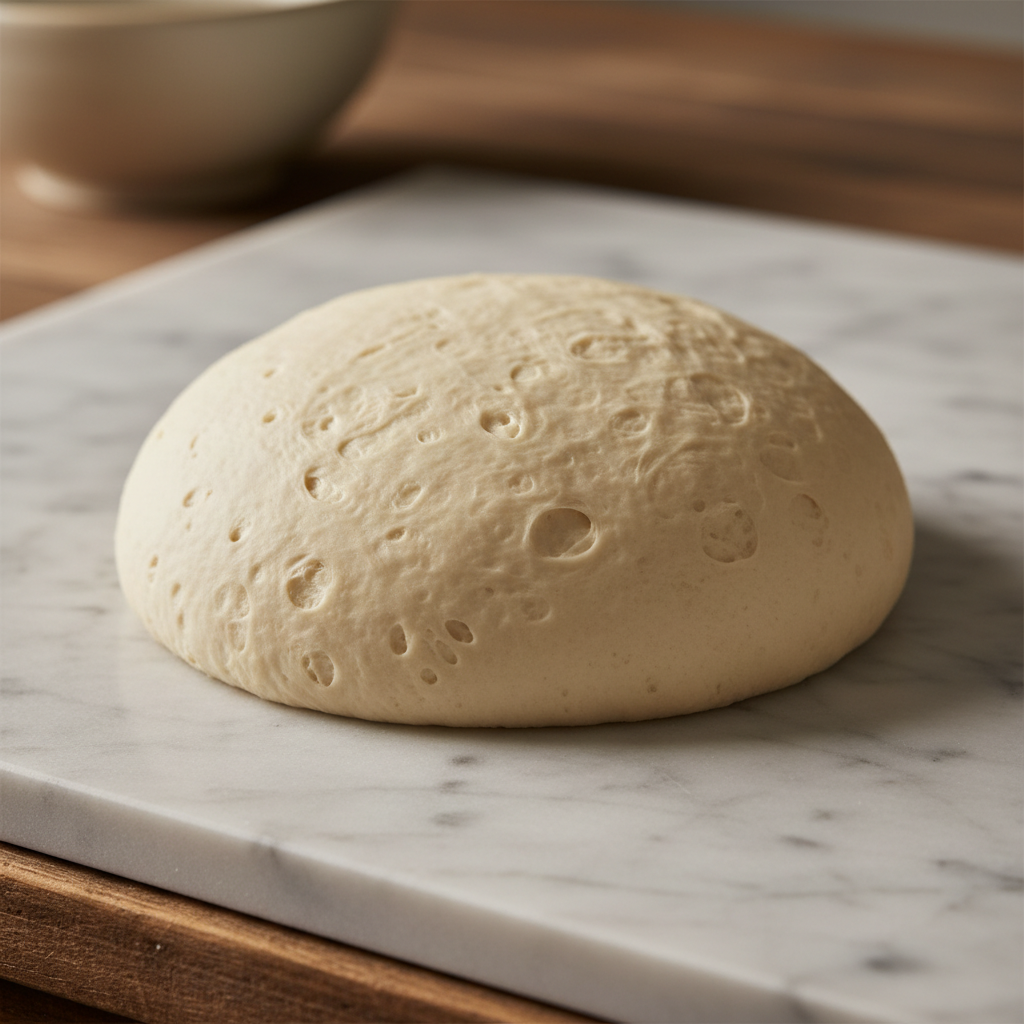
- The dough tells you when it's ready – look for 50–75% volume increase, not the clock
Temperature Matters More
Wild yeast is more temperature-sensitive:
- Below 18°C: Very slow, may stall
- 21–24°C: Ideal range for predictable fermentation
- Above 28°C: Bacteria dominate over yeast, producing more acid
The Flavor Spectrum
You can control the tang:
- Mild tang: Use a young, recently fed starter; shorter bulk ferment; longer cold retard
- Pronounced tang: Use a more mature starter; longer room-temperature ferment
- Adding 0.1g commercial yeast: Provides lift insurance while keeping sourdough flavor
Any Style Can Be Sourdough
Sourdough works with every pizza style in this app:
- Neapolitan sourdough: Soft, blistered, complex
- Detroit sourdough: Rich, tangy, crispy-edged
- Al taglio sourdough: Incredibly open crumb with wild fermentation character
- Focaccia sourdough: The most natural pairing – the tang complements olive oil beautifully
Troubleshooting
- Dough won't rise: Starter isn't active enough – feed it twice before using
- Too sour: Reduce bulk ferment time, use a younger starter
- Dense crumb: Underfermented – give it more time (sourdough can't be rushed)
- Slack dough: The acid can weaken gluten – add an extra fold or two