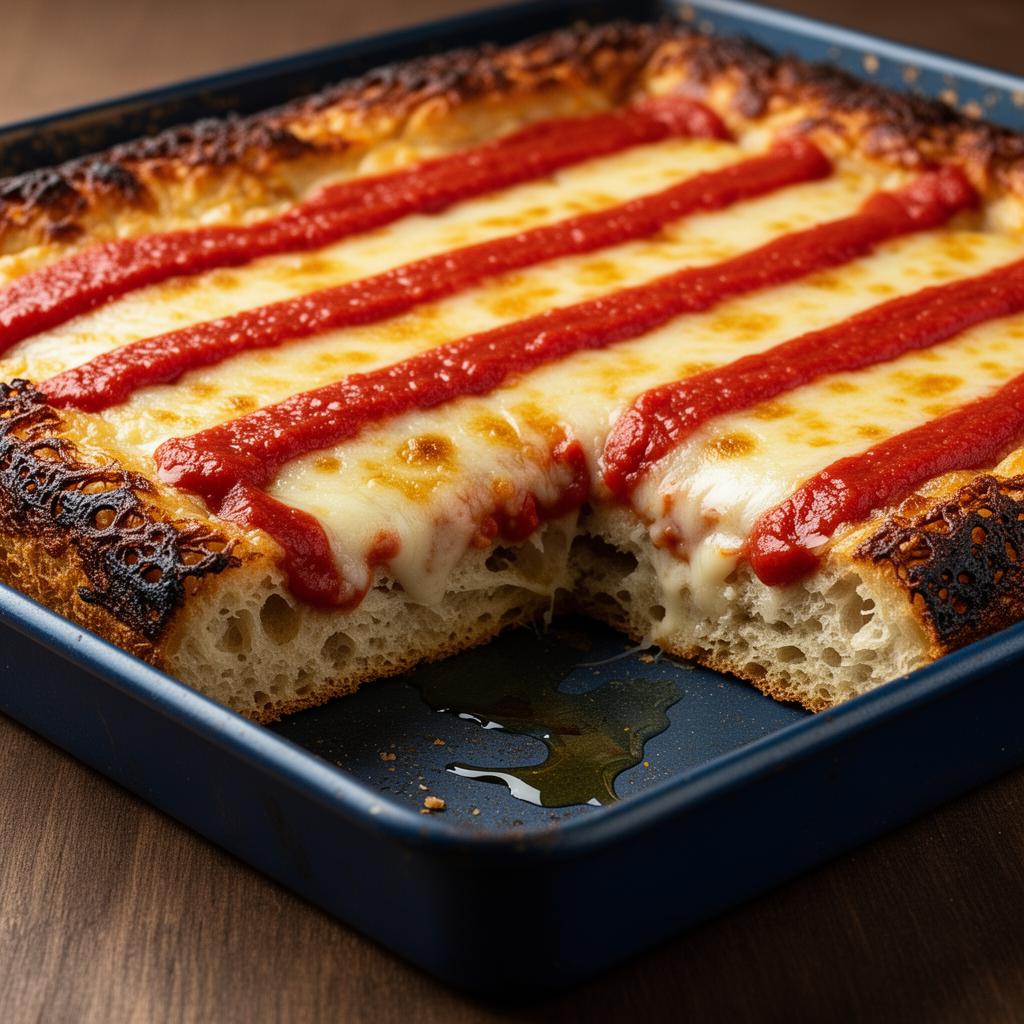
Detroit-Style Pizza
Born in blue steel pans from the auto industry. Crispy, cheesy, unapologetic.
Motor City Origins
Detroit pizza was born in 1946 at Buddy's Rendezvous, a former speakeasy on Six Mile Road. Gus Guerra and his wife Anna adapted a Sicilian family recipe, baking it in blue steel pans — the same pans used to hold small parts in auto factories.
The rectangular pan, the cheese pushed to the edges, the sauce on top — these weren't design choices. They were practical solutions. The industrial pans conducted heat perfectly. The cheese at the edges caramelized into a crispy frico wall. The sauce went on top to prevent the thick dough from getting soggy.
For decades, Detroit pizza stayed in Detroit. It wasn't until the 2010s craft pizza renaissance that the style went national, then global. Today it's one of the fastest-growing pizza styles worldwide.
The Dough
Detroit dough is high-hydration (70–75%) and enriched with olive oil. This creates a bread-like, airy interior with a crispy, almost fried bottom from the oiled pan.
Flour: Bread flour or all-purpose. You want moderate protein (11–13%) for structure without toughness. Unlike Neapolitan, you don't need specialty flour. Hydration: 70–75%. The high water content creates steam pockets during baking, giving Detroit its signature open, airy crumb. The dough will be wet and sticky — that's correct. Oil: 2–3% olive oil in the dough, plus a generous coating in the pan. The oil essentially fries the bottom, creating an irresistible crust. Yeast: Standard amounts (1–2g fresh per portion). Detroit uses a shorter fermentation than Neapolitan — the flavor comes from the cheese, sauce, and that fried-bottom magic.Pan & Technique
Baking
Tools & Calculators
Put theory into practice. These tools are built for detroit-style pizza.
Recommended Gear
Our picks for making detroit-style pizza at home. Links may earn us a small commission.
Lloyd Pans Detroit-Style Pan
Essential10×14″ anodized aluminum. The industry standard for Detroit pizza.
PansBrick Cheese (or Cheddar Blend)
ClassicWisconsin brick cheese is traditional. Mild cheddar + mozz works great.
IngredientsBench Scraper
Handle high-hydration dough without deflating. Also great for portioning.
ToolsDigital Scale (0.1g precision)
Consistent hydration requires precise measurement.
Tools