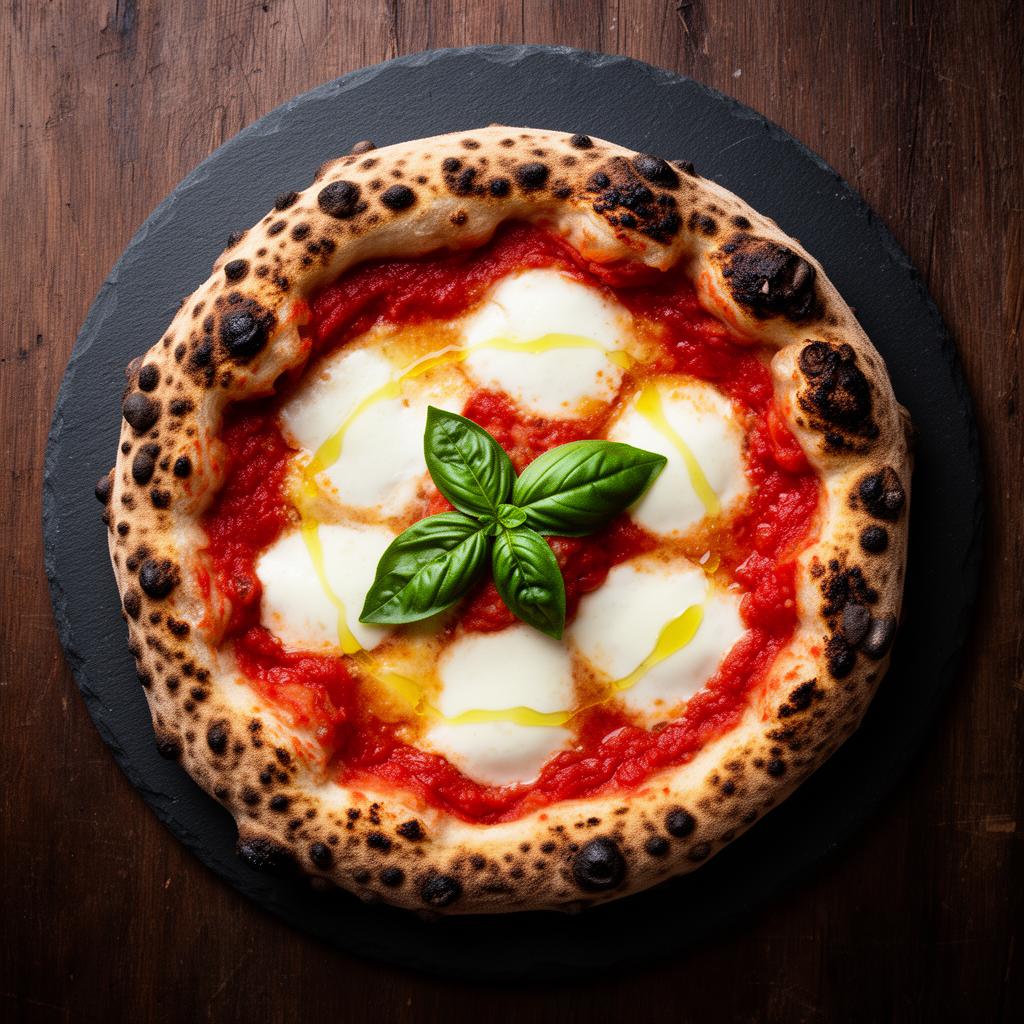
Neapolitan Pizza
The original. The blueprint. 300+ years of tradition distilled into flour, water, salt, and yeast.
A Brief History
Naples, late 18th century. Street vendors sold flatbreads to workers who needed cheap, fast food. The pizza as we know it emerged from the bassi — the ground-floor workshops of old Naples.
The legendary moment: 1889. Pizzaiolo Raffaele Esposito creates a pizza for Queen Margherita of Italy. Tomato, mozzarella, basil — the colors of the Italian flag. Whether this story is entirely true is debated, but the Margherita became iconic.
What's not debated: Naples invented pizza culture. The city's volcanic soil, San Marzano tomatoes, buffalo mozzarella from Campania, and wood-fired ovens created a system that's been replicated worldwide — but never quite matched.
The Dough Science
Neapolitan dough is deceptively simple. Four ingredients. No oil. No sugar. The magic is in the process.
Hydration: 58–65%. Traditional AVPN spec calls for ~58%, but modern pizzaioli push to 62–65% for a lighter, more open crumb. Higher hydration = more steam = bigger bubbles. Flour: Tipo 00 with a W value of 260–320. This is a strong flour that can handle long fermentation without breaking down. In a home oven, Type 550 or bread flour works better — 00 can be too soft without extreme heat. Yeast: Minimal. 0.1–0.3g fresh yeast per pizza ball for a 24h fermentation. The less yeast, the more the flour's natural flavors develop. Time does the work. Salt: 2.5–3% of flour weight. Salt controls fermentation speed, strengthens gluten, and adds flavor. Add it after initial mixing to avoid killing yeast on contact. Temperature matters: Fermentation speed roughly doubles for every 8°C increase. A 24h process at 21°C becomes a 16h process at 28°C. Cold retardation (fridge at 4°C) dramatically slows things down, developing complex acids and alcohols.Fermentation Strategy
The Neapolitan method uses a two-stage fermentation:
Shaping & Stretching
Never use a rolling pin. Never.
The Neapolitan ball is shaped by pushing air from the center to the edges. The cornicione (raised edge) is where all the gas accumulates, creating that puffy, charred rim.
Technique:Baking
The AVPN Standard
The Associazione Verace Pizza Napoletana (AVPN) was founded in 1984 to protect and promote traditional Neapolitan pizza. Their disciplinary guidelines specify:
Is AVPN certification the only way to make great Neapolitan pizza? Absolutely not. Many legendary pizzerias play outside these rules. But the standard preserves a tradition worth knowing before you break it.
Tools & Calculators
Put theory into practice. These tools are built for neapolitan pizza.
Recommended Gear
Our picks for making neapolitan pizza at home. Links may earn us a small commission.
Baking Steel (⅜″ A36)
EssentialBest heat transfer for home ovens. Outperforms stone for Neapolitan-style bakes.
OvenTipo 00 Flour (Caputo Blue)
ClassicThe gold standard for Neapolitan dough. W 260–320 range.
IngredientsInfrared Thermometer
Know your exact surface temp. Critical for timing the bake.
ToolsWooden Pizza Peel (14″)
EssentialLaunch dough smoothly. Wood grips better than metal for raw dough.
ToolsDigital Scale (0.1g precision)
Accurate yeast measurement matters at 0.15g per ball.
Tools