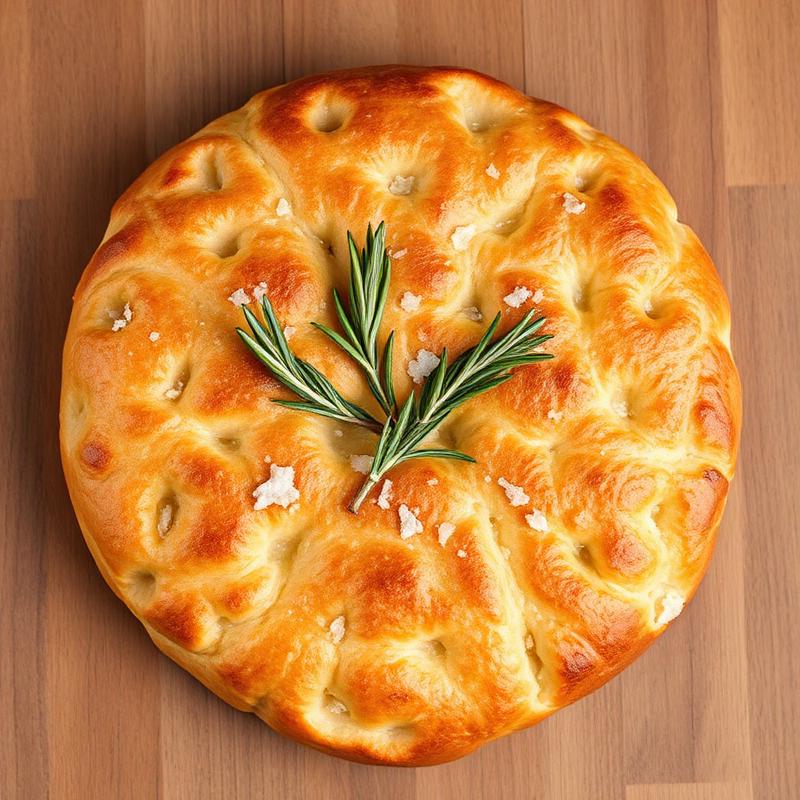
Focaccia
Italy's oil-rich flatbread. Simple ingredients, generous patience, extraordinary results.
Origins & Culture
Focaccia predates pizza. Its roots trace back to ancient Rome — panis focacius, a flat bread baked in the ashes of the hearth (focus = fireplace). Every region in Italy developed its own version, making focaccia one of the most diverse breads in the world.
Liguria's focaccia di Genova became the most internationally recognized style: thin, dimpled, glistening with olive oil, scattered with coarse salt. But calling focaccia a single bread is like calling pasta a single dish — the regional variations are enormous.
What unites them all: generous olive oil, a forgiving dough, and a slow rise that rewards patience.
The Dough Science
Focaccia dough is high-hydration (68–75%) and enriched with olive oil — both in the dough and in the pan. This combination creates the signature open crumb and crispy, almost fried bottom.
Flour: All-purpose or bread flour (Type 550). You don't need Tipo 00 — moderate protein (11–13%) gives the best balance of structure and tenderness. Hydration: 70% is the sweet spot. Higher hydration = more open crumb, but harder to handle. Start at 68% and work up. Olive oil: 8–12% of flour weight in the dough, plus a generous pool in the pan. The oil creates a barrier that fries the bottom and prevents sticking. Use something you'd drizzle on a finished dish — you'll taste it. Yeast: Low and slow. 0.5–1g fresh yeast per 300g flour for an 18-hour process. Same-day versions use 1.5–2g with a 6–8 hour rise. Salt: 2.5% of flour weight. Salt goes in after initial mixing to avoid killing the yeast.Fermentation Strategy
Focaccia's magic is in the long, cold rise. The dough develops flavor, gas, and extensibility over 12–24 hours.
Dimpling & Topping
Baking
Regional Variants
Italy has dozens of focaccia traditions. Each region adapted the basic concept to local ingredients and tastes:
Each variant reflects its region's ingredients, climate, and food culture. The common thread: simple dough, generous fat, and patient fermentation.
Tools & Calculators
Put theory into practice. These tools are built for focaccia.
Recommended Gear
Our picks for making focaccia at home. Links may earn us a small commission.
Heavy Sheet Pan (Half-Sheet)
EssentialThick aluminum distributes heat evenly for a golden, olive-oil-crisp bottom.
PansQuality Extra Virgin Olive Oil
ClassicFocaccia is soaked in it. Use something fruity and fresh — you'll taste every drop.
IngredientsFlaky Sea Salt (Maldon)
The finishing crunch on top. Maldon flakes cling perfectly to oiled dough.
IngredientsSpray Bottle
Mist the surface before baking for extra steam and a lighter crumb.
Tools